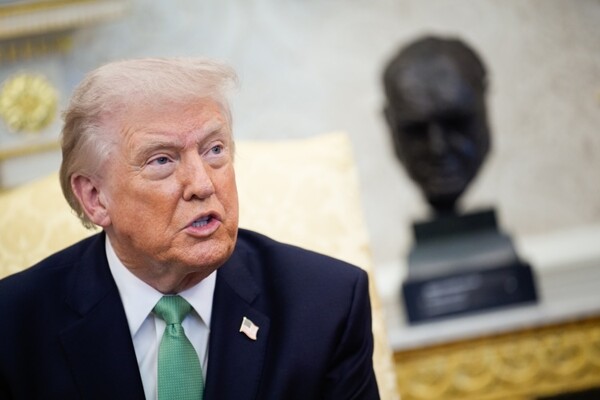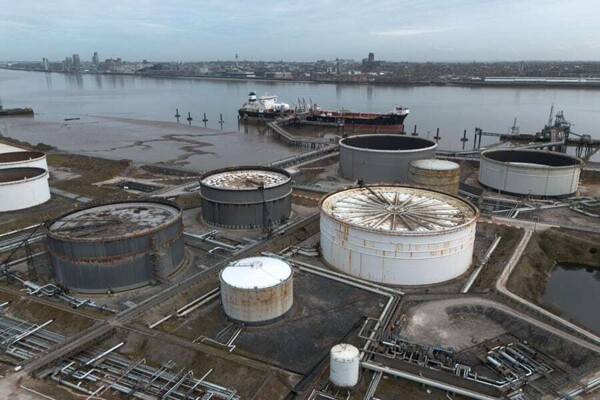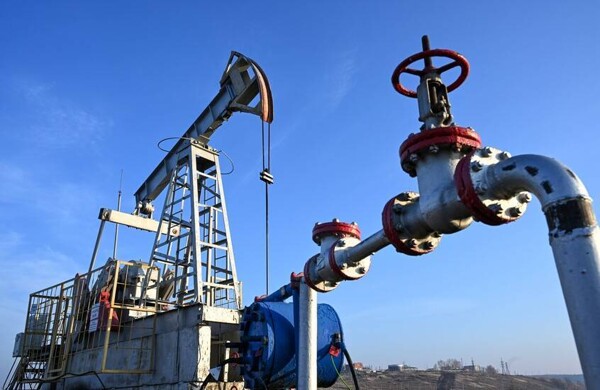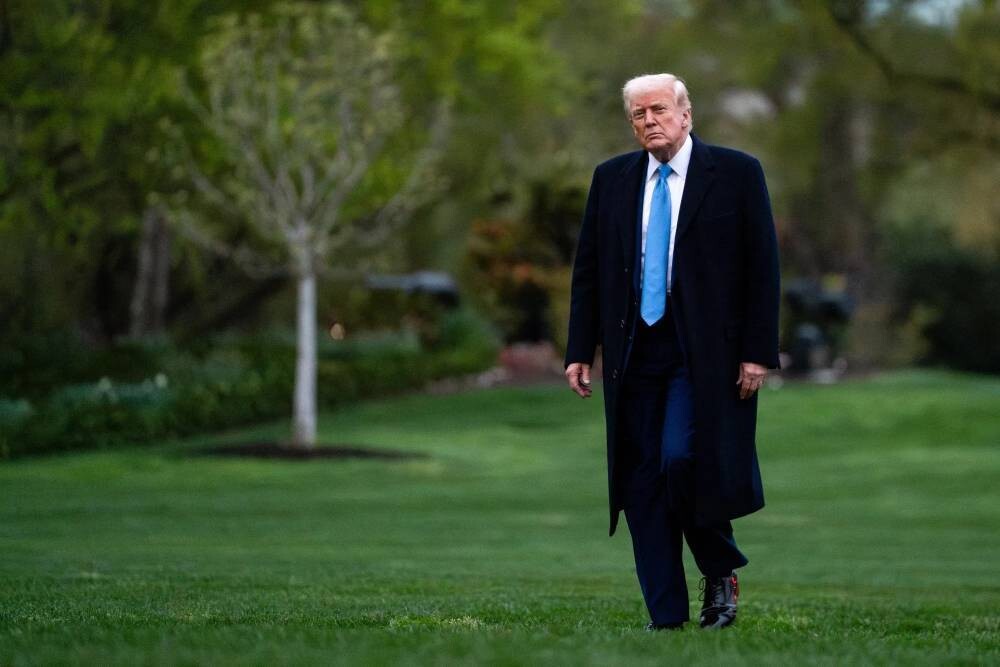
The United States and Iran have held productive talks, and President Donald Trump has announced a suspension of military actions for five days. This move represents a tactical pause in one of the most delicate phases of the Middle East crisis. On the Iranian side, however, the public position remains firmer: background talks could only gain real consistency if attacks cease first and the scenario of coercion is changed. Thus, the pause decided by Trump does not close the crisis, but rather postpones for a few days a decision that could once again push the region to the brink of a greater confrontation. In fact, Trump decided to postpone for five days the attacks he had planned against Iran's electrical system, while leaving the door open to resume the offensive if contacts do not advance in the direction the White House expects. This turn came after a weekend of maximum tension. Political leaders and military commanders of the regime warned that if the United States advanced against Iranian power plants, there would be retaliation against strategic energy facilities throughout the region. From this structure, it was made known that in the event of a strike against Iran's energy network, facilities linked to the electrical, technological, and logistical supply of American and Israeli interests in the Gulf would be threatened. In the background, the Iranian message aimed to show that an attack on critical civilian infrastructure would not be confined within Iran's borders, but could drag the entire strategic neighborhood into the conflict. This warning placed the conflict on a particularly dangerous threshold, because the Strait not only represents a military and geopolitical enclave, but also a decisive artery for the world trade of oil and liquefied natural gas. Iran's response was immediate and also escalated the tone. The diplomatic clock started ticking again, but under an evident condition: if the contacts fail, the conflict could quickly re-enter a phase of escalation over strategic infrastructure, with enormous consequences for the global energy system and for the already fragile stability of the Gulf. The mere possibility of the conflict moving to power plants, energy facilities, export terminals, or water supply systems in Gulf countries raised alarms due to its humanitarian and economic implications. The general picture remains unstable. Hormuz continues at the center of the conflict, because through that maritime corridor circulates approximately one-fifth of the global hydrocarbon supply. On Saturday, the American leader had warned Tehran that it had to fully reopen the Strait of Hormuz within a 48-hour deadline, under threat of a direct offensive against the Persian country's electrical infrastructure. Any severe alteration in that passage immediately affects international energy prices, logistics costs, and global inflation expectations. The U.S. administration is trying to show that it retains the initiative. The message was disseminated through Truth Social, where the president stated that in the last two days there had been 'very good and productive talks' aimed, according to him, at a 'complete and final resolution of the hostilities' in the region. The signal of de-escalation, however, did not imply a fundamental change in Washington's strategic pressure. On the contrary, the pause was tied to the outcome of the ongoing meetings and appears more as an extension of the ultimatum than as an abandonment of the threat. Within this framework, the statements of the Speaker of the Iranian Parliament, Mohammad Bagher Ghalibaf, and the warnings attributed to the Khatam al-Anbiya Headquarters, the country's main military command, were registered. In a region where much of daily stability depends on extremely sensitive critical networks, a strike of this kind could paralyze hospitals, compromise the distribution of drinking water, and disrupt the functioning of ports, refineries, and supply chains. That is why the five-day truce announced by Trump was read as a partial relief, although far from a definitive decompression. The official narrative combines maximum pressure, military threat, and an opening conditioned to negotiation.