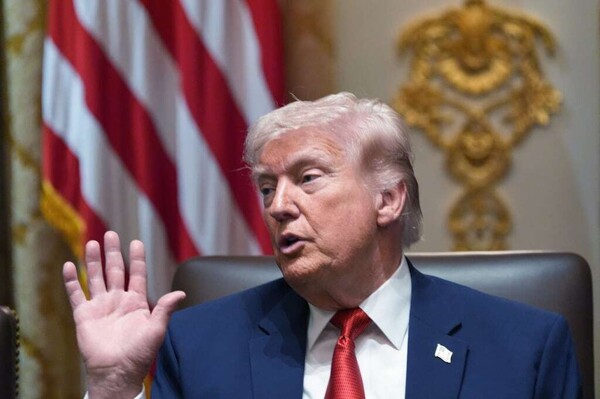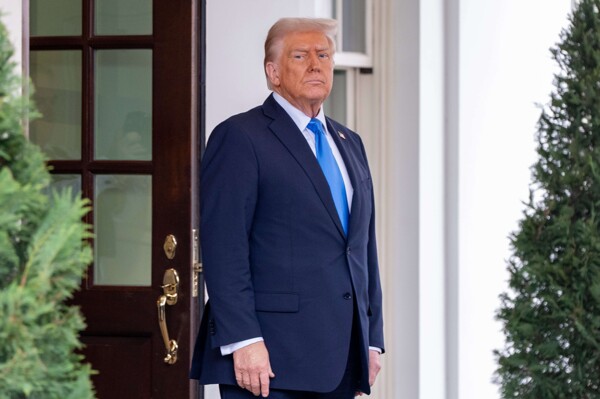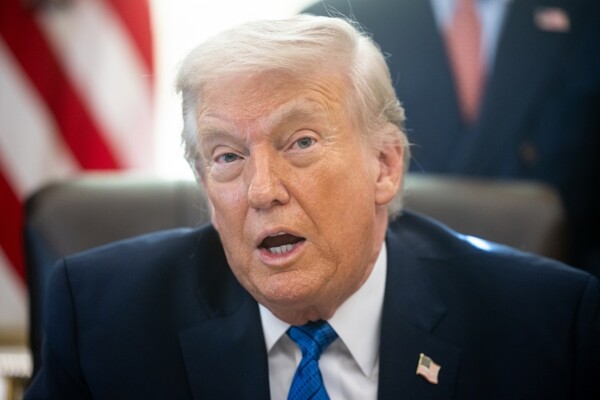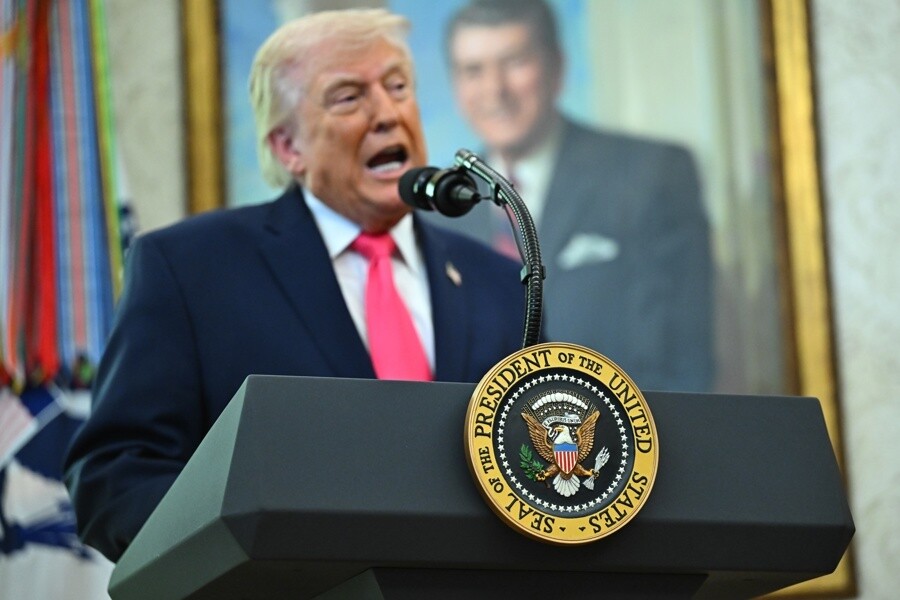
The President of the United States, Donald Trump, has increased the pressure on his allies by threatening to withdraw his country from NATO due to a lack of support to reopen the strategic Strait of Hormuz, while the United Kingdom leads international efforts to find a solution to the conflict. The US president expressed his frustration at the refusal of several countries to get involved in the crisis generated after the offensive launched last February 28 alongside Israel against Iran, which has led to the partial blockage of this key route through which nearly 20% of the world's oil passes. In interviews with international media, Trump assured that he is seriously considering leaving NATO once the war is over, which would be a major blow to the military alliance led by Washington. “NATO never excited me. Governments like Spain have limited their logistical support for the offensive, while other nations have made it clear that they do not consider this conflict their own and will only participate in defensive actions. Even in Asia, countries like Japan have conditioned any intervention on the existence of a ceasefire. In parallel, Trump has sent contradictory signals: although he has ordered the deployment of thousands of marines in the Middle East, he has also indicated that the United States could withdraw from Iran in a period of “two or three weeks,” considering that its strategic objectives are close to being met. The president also left the door open to a ceasefire if Tehran agrees to unblock the Strait of Hormuz, amidst diplomatic contacts with figures from the Iranian regime. Meanwhile, the United Kingdom is trying to take diplomatic initiative. The British Foreign Secretary, Yvette Cooper, convened a virtual meeting with 35 countries for this Thursday with the aim of designing a plan that allows the maritime passage to be reopened once hostilities end. Among the participating countries are France, Germany, Japan, Canada, and Panama, among others, who have already condemned Iranian attacks against commercial vessels and the de facto closure of the strait. The signatories stressed that freedom of navigation is a fundamental principle of international law and expressed their willingness to contribute to ensuring safe transit, as well as stabilizing energy markets. Sources from the Foreign Office admitted that the reopening of the strait “will not be easy,” but highlighted the need for a coordinated response to a crisis that threatens to impact the global economy.