It is much safer and easier to test them on the Moon,” affirms Jackson.
Mysteries to be deciphered The rocks brought to Earth by the Apollo astronauts transformed our understanding of our celestial neighbor. “They revealed to us that the Moon was formed as a result of an incredibly dramatic event, in which a body the size of Mars collided with the Earth and the fragments that broke off formed the Moon. We know this thanks to the Apollo rocks,” affirms Professor Sara Russell. But she adds that there is still much to discover. Since the Moon was once part of the Earth, it preserves a record of 4.5 billion years of our own planet's history. “A new batch of rocks from a different area of the Moon would be incredible.”
Inspiring a new generation The black and white, low-quality images transmitted from the Apollo missions turned the dream of space into reality. And although only a few lucky spectators would become astronauts, many of them ended up dedicating themselves to science, technology, and engineering. It is expected that the Artemis missions, broadcast live in 4K, will serve as inspiration for a new generation. “We live in a technological world. Like any derivative of the technology developed for the missions that has an application on Earth. But Helen Sharman states that the return to the Moon will also give the world a much-needed boost.” With six moon landings in total, it seemed that the Moon had been definitively crossed off the list of pending space tasks. So why is the United States dedicating so much time, effort, and money to the race to return?
Valuable resources The terrain seems dry, dusty, and quite barren, but nothing could be further from the truth. “The Moon contains the same elements that we have here on Earth,” affirms Professor Sara Russell, a planetary scientist at the Natural History Museum in London. “An example is rare earth elements, which are very scarce on Earth, and there could be areas on the Moon where they are concentrated enough to be extracted.” There are also metals such as iron and titanium, in addition to helium, which is used in all kinds of applications, from superconductors to medical equipment. But the resource that most attracts is the most surprising: water. “It has water trapped in some of its minerals and also has substantial amounts of water at the poles,” affirms Russell. There are craters that remain constantly in shadow, she explains, where ice can accumulate. Having access to water is vital if one wants to live on the Moon. And with no tectonic plates, wind, or rain to erase this record, the Moon is a perfect time capsule. “The Moon is a fantastic archive of the Earth,” affirms Russell. But since you have to start somewhere, the United States has decided that place is the Moon. “Going to the Moon and staying there for an extended period is much safer, much cheaper, and much easier as a testing ground to learn how to live and work on another planet,” affirms Libby Jackson, head of the space department at the Science Museum in London. On a lunar base, NASA can perfect the technology needed to provide the air and water that astronauts need.
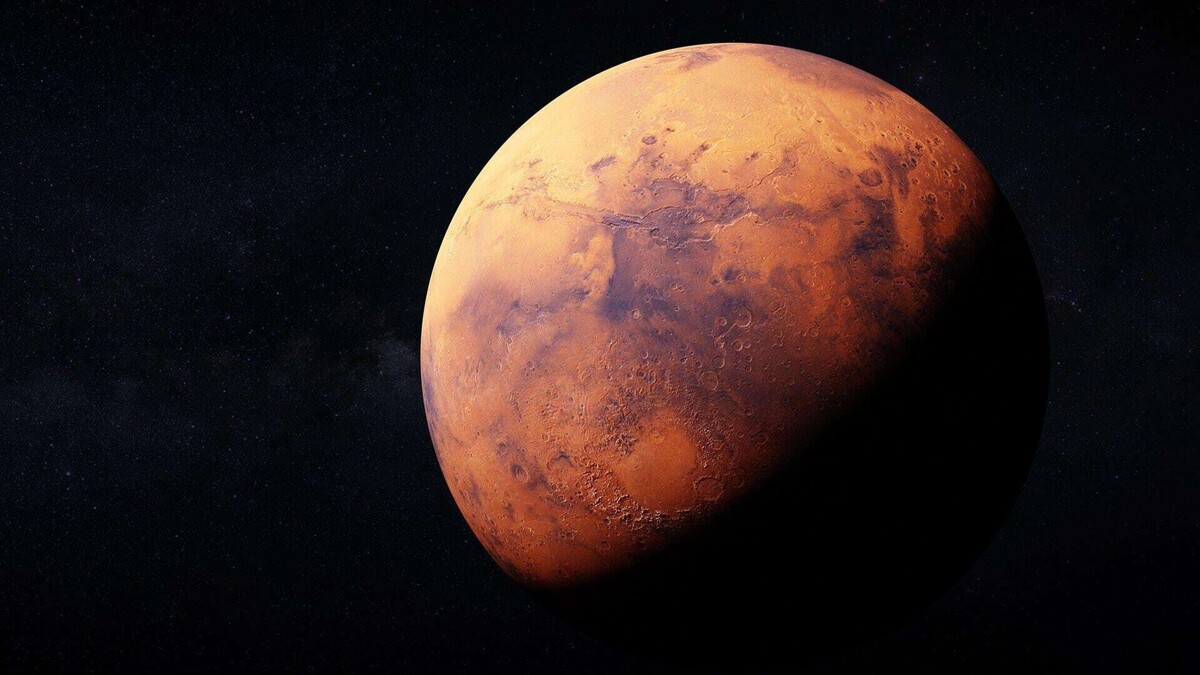
Paving the way to Mars NASA has its sights set on Mars and wants to send people there in the 2030s. Considering the technological obstacles it must overcome, this is a rather ambitious schedule. “We need scientists, engineers, and mathematicians, and space has an extraordinary capacity to awaken people's interest in these subjects,” affirms Libby Jackson. The new jobs and a flourishing space economy will bring the United States billions in benefits from the billions it has invested in Artemis. They will have to figure out how to generate energy and build habitats to protect people from extreme temperatures and dangerous space radiation. “All of these are technologies that, if tested for the first time on Mars and go wrong, could have catastrophic consequences. This time, the rival is China. China has advanced rapidly with its space program. It has successfully landed robots and specialized robotic rovers on the Moon and claims it will take humans there by 2030. Although there is still prestige in being the first to plant a flag in the lunar dust, what really matters now is where it is planted. Both the United States and China want access to the areas with the most resources, which means securing the best lunar territories. The 1967 United Nations Outer Space Treaty states that no country can own the Moon. However, as for what is on the Moon, the issue is not so simple. “Although you cannot own a piece of land due to the UN treaty, you can basically operate on that land without anyone interfering,” affirms Helen Sharman, the first British astronaut. “So what is important right now is to try to secure a piece of land. “If we truly unite, we can achieve many things that benefit humanity,” she says. “It is a testament to what humans are capable of.”
The race for space dominance The American Apollo missions that occurred in the sixties and seventies were driven by a race for space dominance with the Soviet Union.