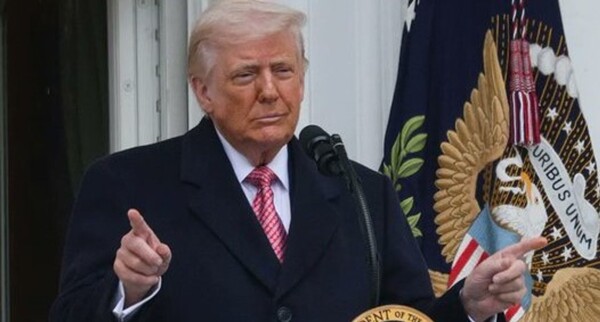
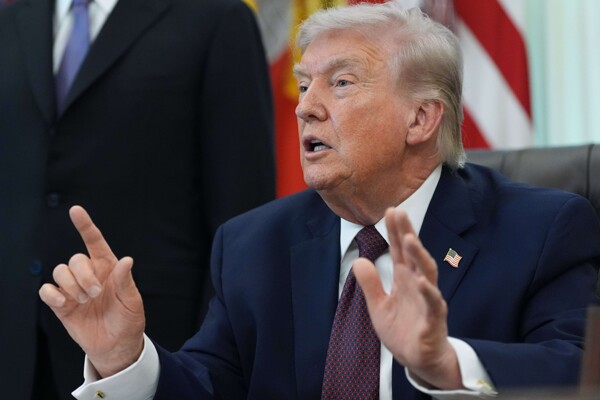
The first signs of a rift in security cooperation between the United States and the United Kingdom are emerging, as tensions between US President Donald Trump and UK Prime Minister Keir Starmer over the Iran war impact practical interactions between diplomats, officials, and military personnel. Recent public criticism from Trump directed at Starmer—where he mocked him, saying he is 'not Winston Churchill' and is a leader who tried to 'join wars after we had already won them'—has had a negative impact behind the scenes, according to sources familiar with the matter. This has been a hallmark of Trump's return to the White House. One of these sources stated that a small number of American officials seconded to UK government departments are increasingly being asked to leave meetings when sensitive information is discussed, a shift from the more permissive approach previously taken. He added that one of the more recent points of tension noticed by Washington is the longer time the UK now takes to approve requests for US aircraft to use UK military sites, such as RAF Fairford in Gloucestershire. He pointed out that these requests used to be approved 'with the stroke of a pen' by the UK but have now become 'more complicated,' with 'a bit of extra tension in the system.' Starmer's reluctance to allow the US to use UK bases for initial strikes on Iran has become a point of tension in UK-US relations. A senior former UK official said, 'Starmer is particularly targeted among European leaders with harsh criticism from Trump over Iran,' adding, 'You can see why things might get a bit tense.' Meanwhile, UK officials have insisted there has been no change to the UK's security policy. They said any proposed US operation originating from a base in the UK is considered on a case-by-case basis under a set of national and international treaties under which the US operates in the UK. UK officials have also had to adapt to a Trump White House that operates through a tighter inner circle during his second presidential term. British diplomats say their traditional channels in Washington are no longer what they once were, and access to information is increasingly dependent on a small group of advisors. An informed source said, 'Under this US administration, we see our ability to access senior political decision-makers diminishing, because the people we could access before are now having their access restricted.' This shift has raised concern in London that the informal networks and institutional ties that form the backbone of the special relationship are becoming less reliable for shaping policy or getting early information on US decisions. However, one UK official strongly disputed this characterization. While all international diplomats have to deal with Trump's inner circle, this official said, 'Our embassy is one of the best in Washington, and it has direct links to American institutions,' pointing to a strong daily working relationship between UK and US officials. Some analysts believe the historically strong ties between UK and US officials no longer act as a 'protective barrier' from political turmoil between the two countries during Trump's second term in the White House. Olivia O'Sullivan, director of the UK in the World programme at Chatham House, said, 'The Chagos is a good example,' referring to the UK government's agreement to hand over sovereignty of the Chagos archipelago to Mauritius and lease the island of Diego Garcia, which hosts a crucial UK-US military base. O'Sullivan added, 'Initially, the UK government was confident that the US State Department supported the deal, even if Trump was sharp in his public statements, but the situation has now reached a point where the consequences are really starting to show.' While US officials are expected to take their lead from political leadership, the division within the MAGA movement and confusion over Washington's strategic goals in Iran make the task difficult for American diplomats and senior officials. This, in turn, 'raises questions for UK officials,' according to O'Sullivan. She cited the 'iceberg principle,' which posits that most UK-US relations operate out of public view and are unaffected by surface-level turmoil. While Ricketts acknowledged there is 'clear damage to trust' at the political level, he said day-to-day communications continue, and Americans are still stationed at UK bases, and it is not unusual for either country to want to have private talks without the other being present. Although Trump has repeatedly criticized Starmer, the UK Prime Minister's National Security Advisor, Jonathan Powell, and his commercial advisor, Farond Chandran, who officially holds the post of UK Special Envoy to the US on Trade and Investment, have close ties with the US administration. Additionally, UK Foreign Secretary Yvette Cooper regularly speaks with her American counterpart, Marco Rubio, with their last contact being last week on the sidelines of the G7 foreign ministers' meeting near Paris. The special relationship has withstood strong disagreements on important issues in the past. This includes the US operating from UK bases, as it has done for decades.' A US Department of Defense (Pentagon) official confirmed that 'the United States and the United Kingdom have a strong, long-standing defense relationship that has endured even during the current conflict.'