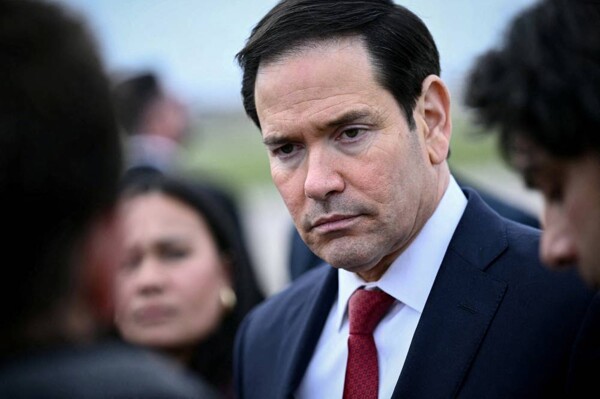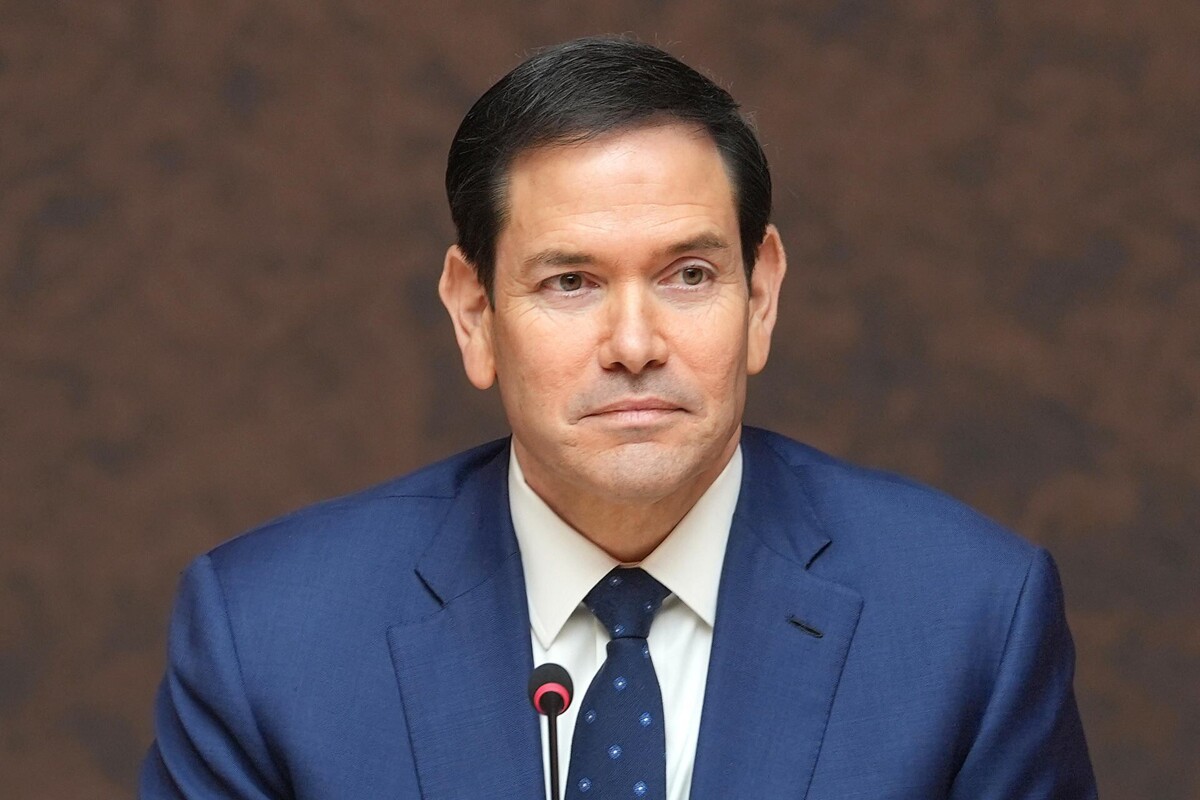
U.S. Secretary of State Marco Rubio said on Friday that "perhaps now could be the moment" for a political change in Cuba and insisted that the country's current government system prevents its economic development. "We need to change the system that runs the country, and it's necessary to change the economic model it has. There are many countries, not just the G7, but also those in Asia, who are taking a big risk (by closing the Strait of Hormuz) and should contribute more to that effort, to make the strait a safe passage," Rubio stated. In this regard, French Foreign Minister Jean-Noël Barrot had assured a little earlier in another press conference of a broad consensus among G7 countries and their partners to preserve freedom of navigation as a "common good" in the Strait of Hormuz. In addition to the foreign ministers of the G7 member countries (Germany, Canada, the United States, France, Italy, the United Kingdom, and Japan), the debates on the situation in the Strait of Hormuz involved ministers from Brazil, South Korea, India, and Saudi Arabia, directly affected by the regional situation, as well as the head of European diplomacy, Kaja Kallas. Rubio, whose parents are Cuban immigrants to the U.S., attributed Cuba's shortages and blackouts to "the infrastructure of the 50s and 60s that has had no maintenance." "We have objectives, and we are very happy to be close to achieving them," he reiterated, without giving details because, as he said, it corresponds to the U.S. Department of Defense. On another of the hottest geopolitical fronts, he revealed that Iran has sent "messages" showing its interest in a diplomatic solution to the war it is waging with the U.S. and Israel, but has not responded to the plan proposed by Washington to end it. "We have not yet received it," he noted. Barrot recalled that for France, the restoration of maritime traffic in Hormuz will likely pass through an "escort" system for ships, in order to guarantee security and allow trade to resume "as soon as the military objectives of the United States have been achieved." The Strait of Hormuz, located between Iran and Oman, is considered one of the nerve centers of global trade, and its stability is essential for international energy supply and other essential products.