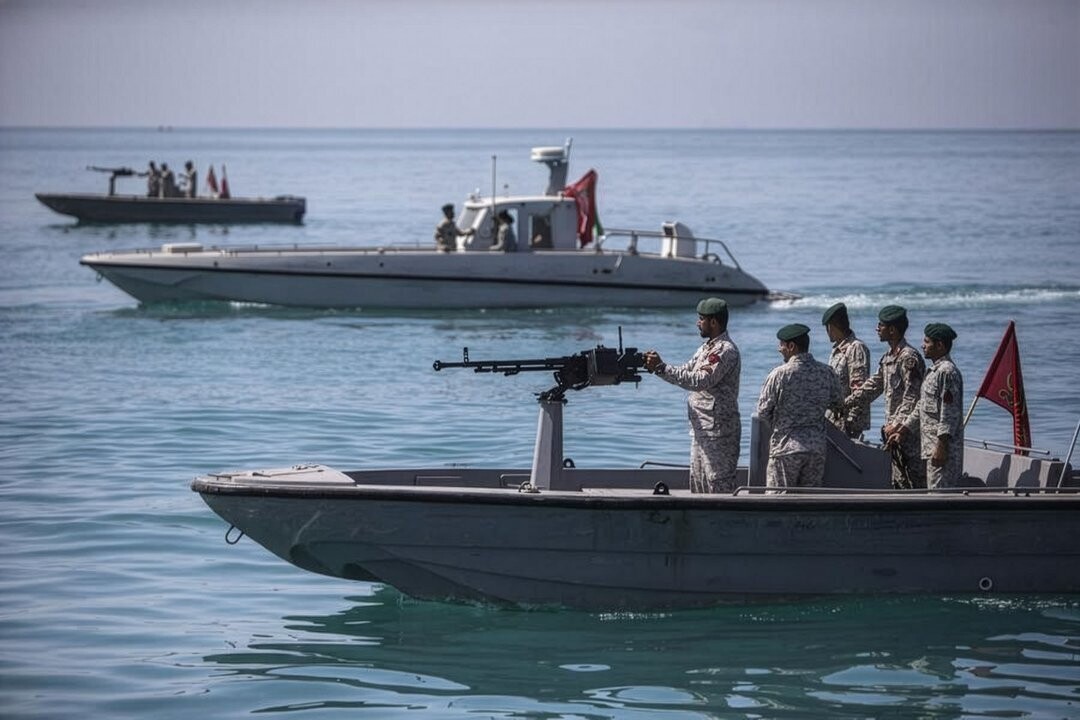
The United States' ultimatum to Iran over the reopening of the Strait of Hormuz has revived concerns over a new escalation of international tensions in a context where conflicts are no longer developing exclusively through traditional military actions, an report on 'cyberwar' indicates. The combination of cyberwar, disinformation, and pressure on critical infrastructure is part of a strategy increasingly used by states to gain geopolitical advantages, with a direct impact on the global economy, political stability, and digital security, scholars in the field state. Hybrid conflicts: an expanding dynamic. The current situation in the Strait of Hormuz has once again put on the agenda a phenomenon that has been pointed out for years: the transformation of international conflicts into hybrid scenarios, where technology plays an increasingly decisive role. Control over strategic energy routes, influence over public opinion through disinformation campaigns, and attacks on critical infrastructure are part of a dynamic that redefines the traditional concept of war. In recent years, various international episodes have evidenced the growth of strategies that combine economic pressure, digital operations, and conventional military actions. The concept of a 'gray zone' describes these situations in which states seek to influence other countries without reaching a formal declaration of war, using different tools. Critical infrastructures are attacked, disinformation operations are carried out on social networks, digital espionage, interference in navigation or communication systems, manipulation of strategic markets, and political influence campaigns. This type of action allows for economic and social impact with less exposure than that caused by a traditional armed conflict. Critical infrastructure under pressure. Sectors such as energy, oil, transportation, telecommunications, and financial services are part of an increasingly interconnected ecosystem dependent on technology. The Strait of Hormuz, through which a significant part of the world's oil trade circulates, represents an example of how a strategically important geographical point can also become a critical node from a digital perspective. The possibility of cyberattacks directed at logistics, production, or energy distribution systems increases concerns about the resilience of economies to technological incidents, according to the Argentine News Agency. Disinformation and public perception. Another central component of current conflicts is the circulation of false or manipulated information, which can amplify political tensions or generate economic uncertainty. Disinformation campaigns allow for influencing public perception, altering democratic debates, and conditioning the decisions of governments or companies. The speed of content circulation on digital platforms enhances the impact of this type of strategy, which can be used by both states and non-state actors. Impact on companies and organizations. The international scenario poses new challenges for public and private organizations, which must be prepared to operate in contexts of greater volatility and uncertainty. The risks associated with hybrid conflicts include: operational interruptions, leakage of sensitive information, attacks on the supply chain, reputational damage, and manipulation of strategic data, cybersecurity experts warn. Current conflicts demonstrate that security can no longer be addressed solely from a technical perspective, but requires an integral view that considers geopolitical, technological, and economic variables. 'The growing digitalization of critical infrastructure expands the surface of exposure to threats that do not recognize physical borders. Today, the stability of countries also depends on their ability to anticipate technological risks and manage scenarios of uncertainty,' states Gabriel Zurdo, CEO of BTR Consulting. The consultant expanded in a report sent to the Argentine News Agency that 'in a context where the border between war, economy, and technology is increasingly blurred, the ability to anticipate risks and strengthen digital resilience becomes an increasingly relevant factor for governments, companies, and societies'.