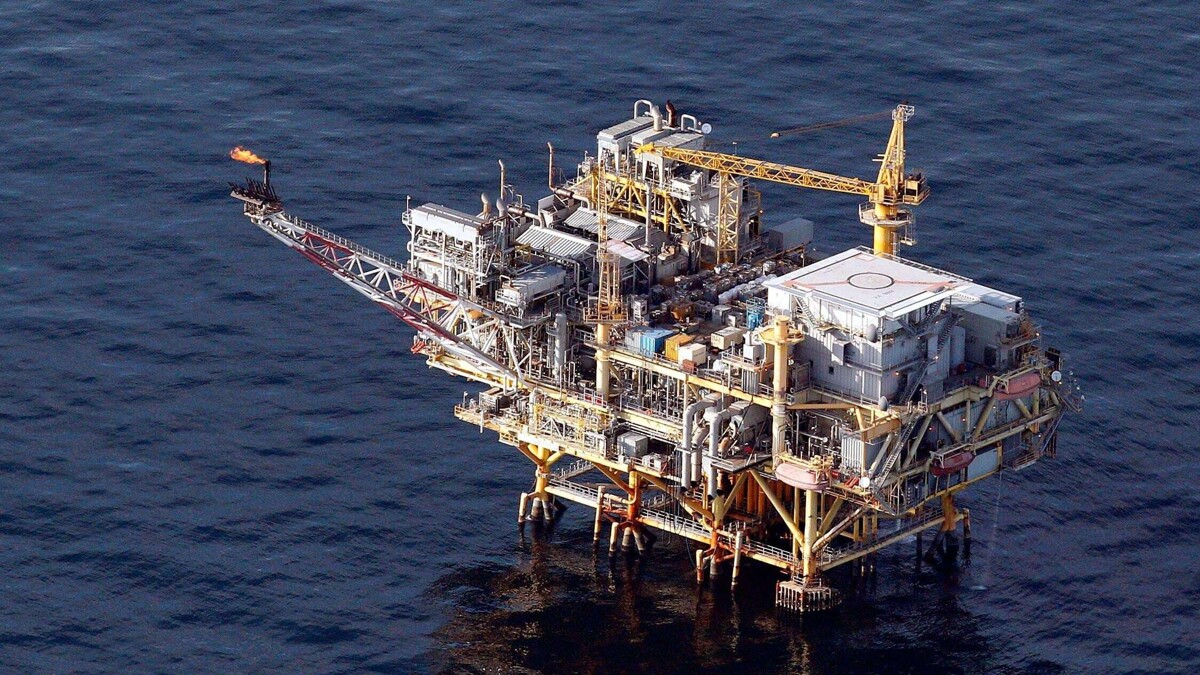
The government of Donald Trump authorized this week new oil drilling in the Gulf of Mexico and, for this, it has resorted to a rarely used mechanism. It is the Endangered Species Committee, also known as the "God Squad," a body with the power to authorize projects even when they may put protected species at risk. The intervention of this extraordinary panel, which had been inactive for more than three decades, comes at a time when the U.S. government is trying to strengthen national energy production amid uncertainty about the future of the global oil market. It also coincides with an oil spill that has contaminated hundreds of kilometers of Mexico's Gulf coast, which that country's authorities are investigating. The "God Squad" met after the U.S. Secretary of Defense, Pete Hegseth, requested an exemption from the Endangered Species Act to carry out new oil and gas extraction projects in the Gulf. Environmental organizations oppose new drilling in the Gulf of Mexico, believing it endangers the survival of several threatened marine species in the region, including the Rice's whale, whose population is estimated at just a few dozen individuals. We analyze how this exceptional committee works, why it has rarely been convened throughout history, and what it means that the Trump administration has activated it now for new energy projects in the Gulf of Mexico. What it is and why it is almost never convened The "God Squad" (God Squad in English), a nickname coined by critics of this panel, refers to its ability to decide the fate of endangered species by authorizing major economic or strategic projects despite environmental risks. The official name of the body is the Endangered Species Committee, a federal body created in 1978 under the Endangered Species Act. This law, which prohibits harming a list of threatened species, provides an exceptional mechanism for projects that would supposedly bring very important economic or strategic benefits. This is where the "God Squad" comes in, which assesses whether a project can proceed even if it puts protected species at risk, as long as there is no reasonable alternative and it serves the national interest or significant economic benefits are expected. The U.S. Secretary of the Interior also approved in March the development of Kaskida, a major deepwater drilling project off the coast of Louisiana run by oil company BP, valued at about US$5 billion with an estimated future production of around 80,000 barrels per day. The Gulf of Mexico region is one of the pillars of the country's oil production, with a production of just under two million barrels per day, between 10% and 15% of U.S. crude, according to the Energy Information Administration (EIA). The Secretary of the Interior presides over the panel, which is made up of high-ranking federal officials such as the Secretaries of Agriculture and the Army, the heads of the Environmental Protection Agency (EPA) and the National Oceanic and Atmospheric Administration (NOAA), and the chairman of the White House Council of Economic Advisers. The law states that the committee's intervention must be a last resort, reserved for situations where there is no viable alternative to the project and the expected benefits are considered sufficiently important. Since its creation nearly half a century ago, the "God Squad" has only met on three occasions and has granted two exemptions. The precedents date back to the second half of the 20th century: in 1979, the committee rejected granting an exemption for the Tellico Dam in Tennessee, a project that threatened the small fish known as the snail darter. More than a decade later, in 1992, it did authorize two exemptions to allow logging in the habitats of the northern spotted owl in the northwestern country, although one of those decisions was later overturned. Why it intervened this time On this occasion, the Trump administration convened the "God Squad" to exempt part of the oil and gas activity in the Gulf of Mexico from the protections of the Endangered Species Act. The request that led the committee to meet came from the Secretary of Defense, Pete Hegseth, who notified the responsible authorities that the exemption was necessary for national security reasons in a context marked by the war in Iran. Hegseth argued that U.S. oil production could be threatened by litigation and regulatory restrictions at a time of tension in the global oil market and sharp rises in crude and gas prices. The exemption granted by the committee would, according to experts, accelerate the approval of new offshore drilling projects and reduce the ability of environmental organizations and opponents to block them in court. This would facilitate the expansion of oil exploration in new areas of the Gulf of Mexico, including areas that have so far remained closed or highly restricted for environmental reasons. The U.S. government.