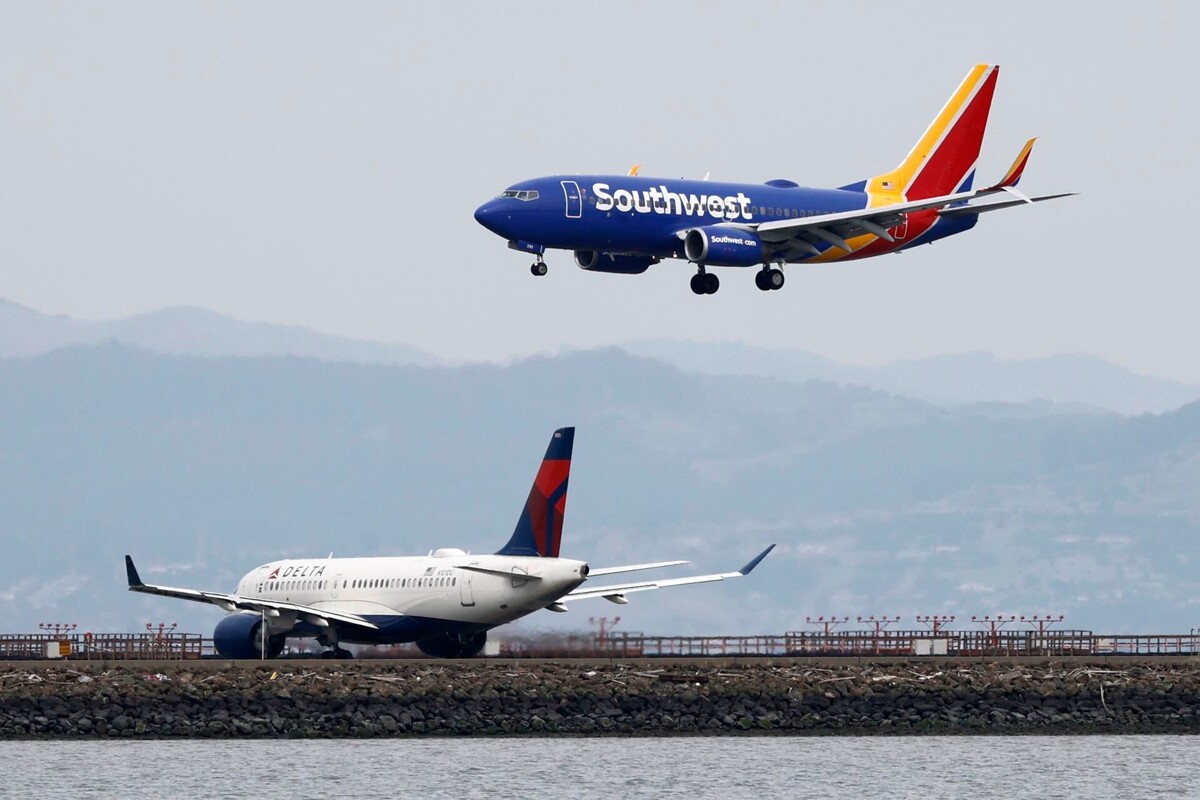
US airlines are tightening their belts amid high fuel prices caused by the war in the Middle East. Jet fuel, the second-largest expense for airlines accounting for about 20% of costs, has surged. This could lead to losses or flight cancellations for low-cost carriers, while major players may increase their market share. Jet fuel prices hit $4.64 per gallon on March 31, up from $2.50 just before the US and Israel's first attacks on Iran. Delta Air Lines is the only major airline to buck the sector's downward trend, with its stock rising 3.4% last month. In contrast, United Airlines and American Airlines fell 10.1% and 14.8%, respectively. Southwest Airlines dropped 22.4%, JetBlue 17.6%, and ultra-low-cost Frontier another 15.2%. Alaska Air Group fell 26.1%, and Copa Holdings 14.5%. Delta is offsetting higher fuel costs with a projected first-quarter 2026 revenue growth that exceeds expectations, as announced by its CEO on March 17. American Airlines faces more uncertainty due to its $25 billion in long-term debt. If high fuel prices persist, pressure will mount first on airlines with thin margins, as tickets are often sold at fixed prices in advance. Credit rating agency Moody's notes that low-cost and ultra-low-cost carriers would be the most affected, highlighting that JetBlue, Spirit, and Frontier already posted losses last year before the latest price surge. On Wall Street, low-cost airlines are feeling the impact. United Airlines CEO Scott Kirby recently told employees that an opportunity might arise to 'acquire assets and absorb network changes,' a phrase interpreted as a sign that he expects competitors to weaken and potentially trigger a wave of mergers and acquisitions where the strong absorb the weak.