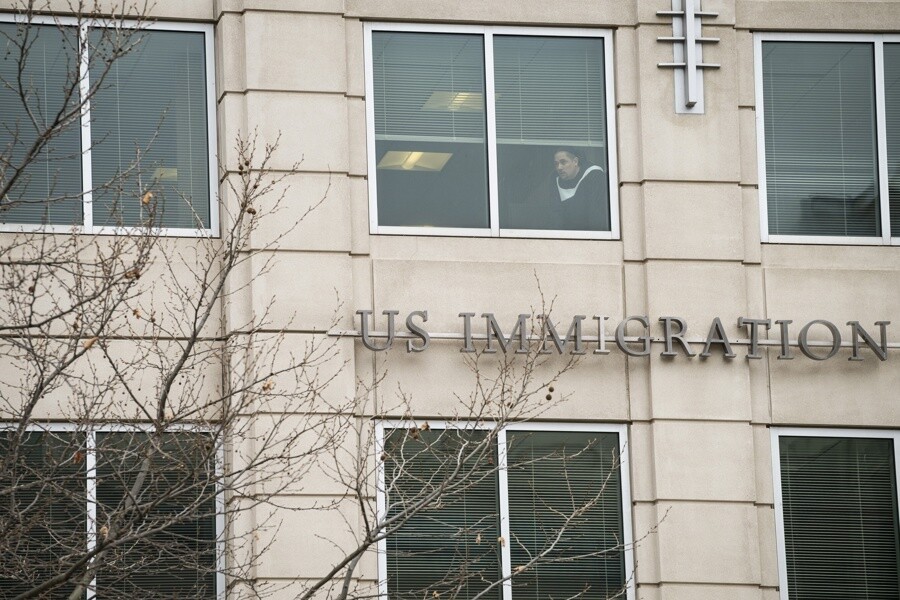
More residence cards will be approved per year. For the fiscal year 2024, 63% of the total 1.3 million immigrant visas approved were granted to family reunification applicants. The nearly four million people currently waiting abroad to receive a U.S. family reunification visa face waiting for 'years' if the government of President Donald Trump does not implement changes to its migration policy, a study by the Value Our Families coalition warned this Wednesday. The report, titled 'Family-Based Immigration and the First Year of Trump 2.0,' concludes that the policies implemented after Donald Trump's return to the White House have 'undermined' long-standing migration structures in the United States, including the family reunification-based system. The research, which uses federal immigration data, found that entry bans and restrictions affecting about 44 countries, including Cuba and Haiti, have had a harmful and direct impact on the family-based immigration system. Applicants from another 75 countries, such as Brazil, Colombia, Guatemala, Nicaragua, and Uruguay, were also affected by a different measure that ordered the suspension of visa issuance last January by the Donald Trump Administration. 'The entry of immigrants from certain countries has clearly caused the separation of families that would otherwise have been reunited through the family-based immigration system,' indicates the report by the coalition composed of nearly 90 immigrant defense organizations. Currently, about 4 million foreigners are waiting for an immigrant visa based on a family petition, the classification by which the U.S. About 669,000 permanent residence cards were granted to so-called 'immediate relatives,' defined as spouses, unmarried minor children, and parents of U.S. citizens over 21 years of age. The study also explains how the mass deportation campaign within the U.S. has also hit family petition requests, by instilling 'fear' among potential petitioners to be detained and deported, even if they are protected by an injunction. This is the case of 42-year-old Mexican María de Jesús Estrada Juárez, deported on February 19, just 24 hours after being arrested when she appeared for an immigration appointment to adjust her status as a mother of a U.S. citizen, despite being protected by the Deferred Action for Childhood Arrivals (DACA) program. The effects of these 'attacks' on family reunification 'will be felt in the years to come,' warned Martin Kim, Director of Immigrant Rights Defense at Asian Americans Advancing Justice (AAJC) in a statement. For Becky Belcore, co-director of NAKASEC, the anti-immigrant actions of the current administration 'also inflict incalculable harm' on individuals, families, and entire communities, so it is important for Congress to act to mitigate greater harm, as well as to improve and expand existing pathways for family reunification.