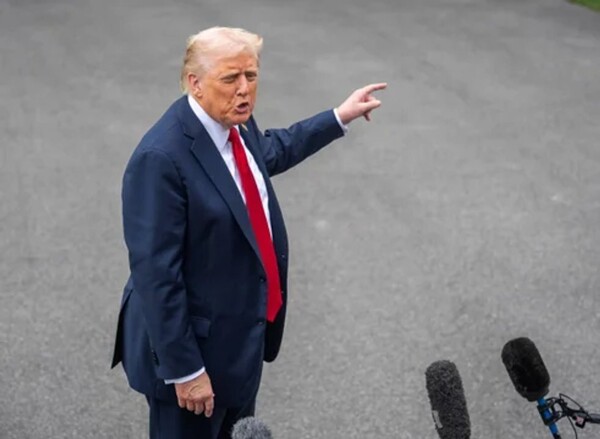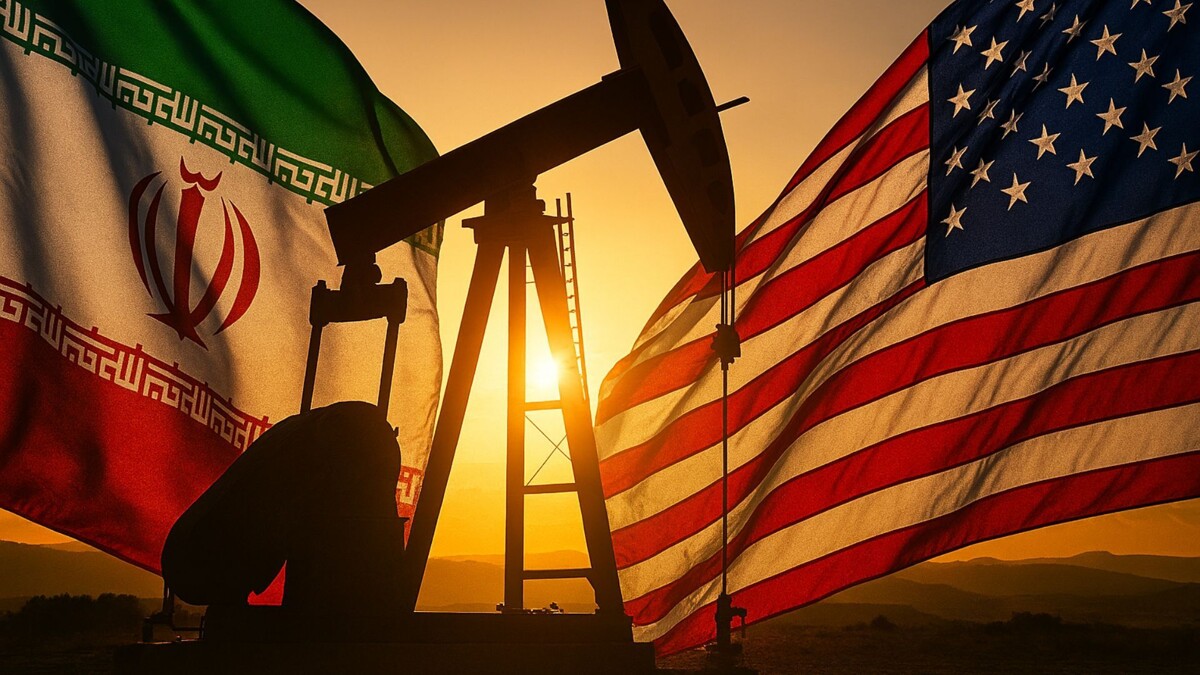
Washington, February 6, 2026 - Total News Agency (TNA) - The United States government has deepened its offensive against Iran's oil exports by announcing a new batch of sanctions targeting the heart of the regime's energy trade. U.S. officials remark that those who facilitate this trade face severe financial penalties and restrictions on access to the international system. In parallel with the imposition of these sanctions, Iran's Foreign Minister, Abbas Araghchi, held a meeting in Oman on the same day with envoys from Trump, in an attempt to reactivate dialogue channels on the controversial Iranian nuclear program. Washington maintains that these maritime and corporate structures are key to hiding the origin of the oil and facilitating its placement in the international market. A spokesperson for the State Department, Tommy Pigott, affirmed that the resources obtained through Iranian oil not only sustain the regime but also finance activities that destabilize various regions of the world and reinforce internal repression mechanisms. Analysts warn that U.S. decisions in this front not only impact the Iranian economy but also have collateral effects on international trade, the stability of energy markets, and the delicate political balance in the Middle East. In an interdependent world, the hardening of U.S. policy towards Iran once again highlights how economic sanctions have become a central tool of strategic confrontation, with consequences that transcend borders and reconfigure the international chessboard. The U.S. leader even threatened to use military force and ordered a reinforcement of the U.S. naval presence in waters near the Iranian coast, as part of a pressure scheme aimed at deterring regime actions and protecting strategic interests in the region. The new sanctions, dated February 6, 2026, are set in a global scenario marked by growing tensions, where energy interests, regional security, and geopolitical disputes are becoming increasingly intertwined. Araghchi described the meeting as having taken place in a "positive atmosphere," although the political and social backdrop surrounding these talks is particularly tense. For months, Iran has faced an internal scenario marked by violent protests and growing state repression—the biggest internal challenge since the 1979 Islamic Revolution. The measures, announced last Friday, target 15 entities, two individuals, and 14 vessels identified as part of a so-called "ghost fleet," used to evade international controls and sustain the sale of Iranian crude in global markets. According to official information, the sanctioned vessels operated under the flags of countries such as Turkey, India, and the United Arab Emirates, exposing the complexity of the commercial and logistical networks that allow Tehran to maintain income despite existing restrictions. In this sense, he emphasized that U.S. policy seeks to cut off these sources of funding, framed within the "maximum pressure" strategy driven by the Trump administration since its first term began in 2017. The sanctions also have a strong deterrent component towards third countries and companies, which Washington urges to reconsider any commercial ties with Iran, particularly the purchase of crude oil and derivatives. This context adds urgency to diplomatic contacts, although it does not dilute mutual distrust or the deep strategic differences between Washington and Tehran. The stance of Donald Trump towards Iran has been characterized by an openly belligerent tone.