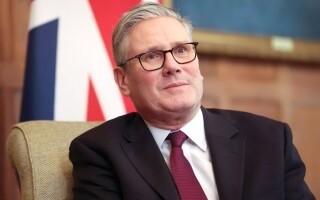
The outcome is a bloc structurally dependent on two great powers, the United States and China, rich in actions but weak in results. Trump approached this reality with enthusiasm, addressing European leaders with superiority, publicly and repeatedly mocking them and their reliance on American protection. Indeed, Atlantic history has witnessed two of the most humiliating scenes: when Trump seated European leaders in the White House and lectured them, they were more like 'bad' students, and the second scene came when NATO Secretary-General Mark Rutte addressed the U.S. President as 'Uncle,' thereby reducing the dignity of 32 member states to a mere gesture of submission. Then, the same official appeared before the European Parliament, mocking any hint of Europe's ability to defend itself without the U.S., saying: 'Keep dreaming.' These events exposed the hypocrisy of pretense. Even sovereignty became artificial, as shown by the Greenland affair, when the European political class and its followers celebrated a supposed victory because Trump softened his demands on the Danish island, despite a secret agreement with his 'disciple,' Rutte, which was only revealed weeks later, and the flaw could no longer be denied. This was not about credibility or unity, and certainly, sending a few dozen soldiers from seven countries for routine exercises will not change Washington's calculations. Claiming deterrence without strength is a dangerous illusion. Beijing applies pressure without noise and with more patience, dealing with Europe as a client unwilling to create alternatives, and consequently, doomed to postpone independence indefinitely. Meetings, selective concessions, and symbolic gestures are replaced with restraint and silence, as structural dependency deepens. The stream of European visits to Beijing reflects the reality of the situation, and rapprochement with Chinese leadership is seen as an achievement in itself. These visits promise stability, reduced volatility, and multiple options in an era of unpredictable U.S.-China relations, ultimately becoming mere trade deals. European government leaders return, celebrating marginal gains that change nothing, and announcing their fear of exclusion. The British case, Prime Minister Keir Starmer's visit to Beijing after an eight-year break in official meetings between the two countries' leaders, reveals this ambiguity. Critics who moralize the absence of diplomatic engagements miss the essence of the matter, as do advocates who promote it as enlightened realism. In truth, the problem is not diplomatic meetings but the lack of their purpose. China's weight in innovation, manufacturing, research, and technology makes withdrawal costly in vital areas, from artificial intelligence to life sciences and climate action. Because the underlying contradictions persist, Europe wants American security guarantees and intelligence infrastructure, yet resents U.S. 'bullying'; it wants Chinese markets and industrial inputs, yet resents Chinese influence; it wants to speak the language of sovereignty, yet abandons the tools that make sovereignty credible. Here, the current generation hides behind long-standing weaknesses to avoid accountability. These weaknesses have accumulated over decades, but this generation inherited a golden opportunity where early action could have had a positive impact. Fundamentally, the true motive for entering politics is to bear costs on behalf of the public, not to evade them to preserve personal survival. Thus, power has never been the determining factor. Power enables leaders to reorder timing and sequence, lift constraints, and build credibility through timely action. Accordingly, why has the current political class in Europe failed to act? Because pre-imposing costs requires visible confrontation and sacrifice, which are constantly replaced by reasonable denial and institutional protection instead of leadership. In short, the current ruling class in Europe lacks the political capital and standing needed to impose costs, and lacks the will and credibility to build the required influence. Their excuse is the public itself, which does not accept sacrifice, and this claim is used as a convenient cover for paralysis. In reality, European societies have accepted sacrifices when costs were explained immediately and distributed fairly, and linked to tangible protection. The result is the deliberate weakening of alliances, with each country seeking quick solutions, describing them as national interest, then expressing shock when collective influence fades. One country trades symbolic concessions for market access, another seeks exceptions to regulations, a third demands American protection, and a fourth courts Chinese capital. Correction begins first by abandoning slogans and restoring flexibility. Flexibility means absorbing pressure without surrender, through shared capabilities and collective mechanisms that raise the cost of pressure. This requires early acceptance of friction and pre-defining trade-offs, rather than improvising under pressure. Second, every major decision on trade, investment, technology, and infrastructure must be subjected to a coercion test. Third, industrial policy must be free of any semblance. Europe does not need to rebuild everything, but it must secure the pillars that define resilience: advanced manufacturing, dual-use production, and effective procurement systems that create European champions. Fourth, leadership renewal must be taken for granted. The current generation of politicians rules as stewards in a period of succession, and Europe needs leaders ready to spend political capital, bear the hostility of protected interests, and secure commitments from various parties that make retreat politically costly. As long as exploitation remains cheap, Washington will practice it. As long as pressure tools remain effective, Beijing will use them. There is no other way for Europe to change this situation but to make these practices costly for Beijing and Washington. Otherwise, it will continue to pay the price for delayed decisions until the option of delay no longer exists. The current generation has finished the training phase, and the lesson has been taught publicly, humiliatingly, and repeatedly. Either Europe creates the capacity to foil pressure, or it will remain a market vulnerable to exploitation, a security agent held accountable, and talk of sovereignty while surrendering the means of defense.