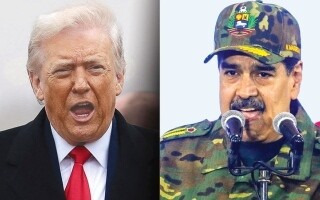
Ultimately, the United States withdrew, and since then, what has changed is less the goal than the method. The continuation of pressure. As Washington retreated from its commitment to multilateralism, Europe remains rooted in this approach, making coercive practices, such as restricting energy flows, seem like a violation of international norms and imposing a high political and ethical cost on those who practice them. This approach is clearly evident in Afghanistan, where the European Union funds a project to link the energy grids of Central and South Asia, known as the "Energy Corridor," which depends on the continued compliance of the Kabul government with the conditions of the international community. If the use of pressure in the energy sector becomes part of American policy tools, Europe must prepare now by enhancing collective purchasing, consolidating internal solidarity, and investing in partnerships that give it influence beyond traditional markets. From "The Hill" A Warning Signal. The most dangerous thing that can happen to Europe is to continue to believe in the illusion that the United States will always be a flexible and tolerant partner. However, the current reality indicates a clear shift, where hydrocarbons are being used as a tool of political and economic pressure. Skeptics believe that this strategy is overestimated in its effectiveness, given that Venezuelan oil is heavy and costly, while global prices hover around $60 a barrel, and major oil companies are extremely cautious in their investment decisions. Despite the validity of these observations, they do not get to the heart of the matter, because pressure in the energy sector does not necessarily require a complete cut-off of supplies. This type of pressure relies on the selective application of laws, creating a state of uncertainty, and imposing restrictions on shipping and insurance. If international self-restraint collapses, Venezuela will not be an exception but a warning signal and the beginning of a new chapter in the history of international relations, where power is measured by who holds the keys to energy. Trump redefined international rules and norms, subjecting them to the logic of energy markets and their balances. If the use of pressure in the energy sector becomes part of American policy tools, Europe must prepare now. Here it became clear that the United States is no longer content with managing the market from behind the scenes through allies and market mechanisms, but is openly using oil as a direct tool of pressure. A Clear Shift. For decades, American officials have insisted that it is energy markets, not raw energy sources, that control supply and demand. Moreover, responding to pressure with similar pressure could lead to an escalation that ultimately benefits Washington. Nevertheless, history shows that overt pressure rarely yields positive results; in the 1990s, the United States sought to impose its influence in Afghanistan to secure energy transit routes, which led to two decades of brutal war that cost many lives without achieving the desired goal. Thus, the region became a testing ground for how much influence in the energy sector can exert political pressure before concerned governments submit. The Real Goal. Accordingly, the Americas can be considered an experimental phase, while the real target is Europe, which suffers from a severe shortage of energy resources, whether oil or gas. Oil and gas will remain decisive factors in shaping international issues in the coming decades, and U.S. President Donald Trump clearly demonstrated this reality by redefining international rules and norms, subjecting them to the logic of energy markets and their balances, where the handling of energy shifted from a purely economic framework to an explicit political tool of pressure. After the arrest of Venezuelan President Nicolás Maduro, Trump explicitly stated his country's intention to "rule Venezuela," including its vast oil sector. Thus, measures that were previously unthinkable have become part of standard practice. The lesson learned is not that dialogue can replace pressure and force, but that pressure itself takes on various forms and degrees of impact. As tensions with Denmark and Greenland escalated, Europeans found themselves facing a troubling question: if energy is used as a bargaining chip, will Trump follow the lead of Russian President Vladimir Putin? This danger grows with time as Europe faces the possibility of a double energy siege: one from Russia, and the other from the United States. However, this assumption is being questioned, especially in light of Trump's policies toward Europe, which suggest his indifference to those rules or shared values. A Political Weapon. The tariffs imposed by Trump revealed how easily economic relations can be turned into a political weapon. After years of harsh sanctions and security measures that crippled the country, it was announced that Venezuela's oil industry would be revived under American terms and with the support of expected investments from major oil companies amounting to about $100 billion. The talk of reviving oil production in Venezuela seemed overly ambitious until Caracas agreed to ship $2 billion worth of crude oil after the seizure of tankers made the cost of refusal prohibitively high. Its economy, which has not yet fully recovered from the effects of the Russian siege, will be vulnerable to a new shock of unknown consequences. In fact, there is a structural weakness within the European Union itself, where energy is purchased at the national rather than collective level, opening the door to weakening solidarity among member states under pressure. European diplomats continue to pressure and engage with regional governments and civil society organizations to ensure the continuity of this project, including cooperation with the Organization of Islamic Cooperation. While this type of pressure seems slow, it is persistent and cumulative, and it operates through networks that cannot be shut down simply by closing a pipeline. Europe has used this approach before, when Moscow's ability to influence the energy market weakened not only due to sanctions but also as a result of continuous scrutiny from civil society organizations. Institutions such as the Clean Air and Energy Research Center and Greenpeace exposed sanctions evasion schemes, identified complicit parties, and pressured for the imposition of oil price caps and tightening of enforcement mechanisms. These coercive measures in Venezuela continued even after media interest waned, leading to the disruption of supplies to Asia and exposing billions of dollars of Chinese investments to risk. In the same context, warnings were issued to Cuba, which heavily relies on importing oil, that oil shipments would not reach its shores except on terms set by Washington. The Russian war on Ukraine, which ended about four years ago, ended decades of European dependence on Russian energy. Breaking away from this dependence was extremely costly, with an average cost of about $1,500 per European, but it was considered a necessary price to pay to free oneself from Russian dominance in the energy sector. American suppliers quickly flowed into the European market, and the United States became a competitor to Norway as a primary source of oil within the European Union, and now supplies the Old Continent with about 60% of its liquefied natural gas needs. Europe reassured itself with the belief that the United States is a strategic partner with which relations are governed by mutual restraint and shared values.