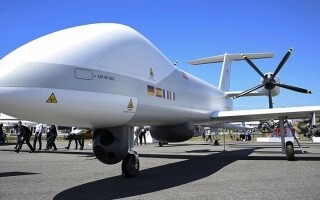
Statements by US President Donald Trump regarding his desire to acquire Greenland have sparked a wave of questions among US allies in NATO about Europe's ability to manufacture its own military needs, which would allow it to wage any potential war without American support. Defense analysts, in response to this question, believe that Europe possesses the capability in principle but has not yet reached this stage. The European defense sector, which had long stagnated, has seen rapid growth in recent years, with an increase in the production of drones, tanks, ammunition, and various weapon systems at rates not seen in decades. This development comes as the continent seeks to rearm itself to counter a potential Russian attack, alongside escalating political and strategic disagreements with the United States. However, the path to full military independence remains long. The International Institute for Strategic Studies estimates the cost of rebuilding Europe's defense industry and replacing the US military equipment and forces currently on the continent at around one trillion dollars. Moreover, the 'old continent' has clear gaps in its manufacturing capabilities, including stealth fighters, long-range missiles, and satellite-based intelligence systems. Industrial Base Despite the increase in European defense production in recent years, the continent's military industry still suffers from fragmentation and lacks the resources of its American counterpart, supported by the world's largest military budgets. Nevertheless, Europe has not yet reached a decisive break with the United States. On the other hand, some defense officials believe that the pace of European production is still insufficient, particularly in aviation and aerospace. For example, the French company Dassault faces a backlog of orders to produce hundreds of fighter jets, while Europe still needs at least 10 years to develop its own stealth fighter. NATO Secretary-General Mark Rutte said at the Davos forum that Poland's purchase of weapons from South Korea shows that Europe, along with the United States, is not accelerating defense production at the required pace. In turn, Leonardo CEO Roberto Cingolani, whose company manufactures military helicopters, radar systems, and other military components, stated that one obstacle to Europe's rapid rearmament is fragmentation. He added in a recent interview: 'Every country wants to have its own tanks, planes, and ships, and of course, the fragmentation of investment, research and development, and procurement scatters efforts.' Gap Europe lags behind the United States in space-based intelligence and military cloud computing and relies on US companies to manage battlefield data. Although Europe was historically a pioneer in developing some missile technologies, it now produces only limited quantities of ballistic or long-range missiles, highlighting a persistent gap in certain strategic military capabilities. Questions about Europe's ability to manufacture its own military needs, allowing it to wage any potential war without American support. Nevertheless, the sharp rise in European defense spending, coupled with renewed research and development efforts, is gradually bringing the continent closer to achieving greater operational independence, and in some cases, this transition is happening at a remarkable pace. In this context, defense budgets across European countries have seen significant increases, accompanied by new investments in research and development, which reinforces the trend toward building a more independent European military industrial base. For instance, at the end of 2024, German Clemens Curtin founded the company 'TwentyFour Industries,' specializing in drone manufacturing, based in Munich. In less than a year, the company managed to sell hundreds of drones to various European armies. Urgent Need This highlights a growing and urgent need to formulate a clear European response to potential American policies, not only concerning Greenland but also within the broader security alliance that has linked Europe and the United States since the end of World War II. In this regard, European Commissioner for Defense Industry Andrius Kubilius said at the World Economic Forum in Davos that any US reduction in military presence in Europe requires Europeans to seriously plan for what could be described as a 'European pillar' within NATO. This approach includes replacing so-called strategic supporting elements, such as satellites, in which Europe currently heavily relies on the United States. Trump had previously called on European nations to increase their defense spending as the United States shifts its strategic focus to Latin America and Asia, which could lead to the redeployment of its military assets out of Europe. Concerns Recently, disagreements between Washington and European capitals over Ukraine, and then Greenland, have raised increasing fears that the United States might halt weapons supplies or even prevent Europeans from using the American military systems they own. In this context, Finnish President Alexander Stubb said in Davos that his country's fleet of American-made fighter jets cannot operate without continuous American support, as jet aircraft typically require spare parts and software and technical updates from the manufacturer to ensure operational readiness, which forces countries like Finland to rely on continued cooperation with Washington to maintain their air capabilities. Steady Steps Defense and aviation industry executives see the transition to a self-sufficient European defense industry as moving in steady steps. Curtin notes that the speed of his company's production launch is due to the readiness of European investors to fund defense companies, the availability of skilled personnel, and the acceleration of government procurement procedures. This progress is driven by the largest increase in European military spending since the Cold War. Last year, countries on the continent spent about $560 billion on defense, according to estimates by Bernstein analysts, double the amount spent a decade ago. Europe's spending on military equipment is expected to reach about 80% of the US Department of Defense's 'Pentagon' spending by 2035, compared to less than 30% in 2019. This shift could have direct implications for the US defense industry if Europe moves more toward local production. According to estimates by the British firm Agency Partners, Europe represents up to 10% of the revenues of US defense companies. Local Production As a sign of this trend, the German company Rheinmetall has opened 16 new factories or begun constructing them since 2022, following the start of Russia's war against Ukraine. The Italian company Leonardo increased its workforce to 64,000 within two years. MBDA, the largest missile manufacturer in Europe, has increased its production of air defense and anti-tank missiles several-fold compared to the pre-war period. Companies manufacturing drones have spread across Europe, with Estonia emerging as a leading model in this field. In some cases, European production has surpassed American output. Rheinmettal's production capacity is expected to soon reach 1.5 million 155mm artillery shells per year, exceeding total US production. Europe largely relies on itself for the production of armored vehicles. The German Leopard tank is one of the most widespread globally. The continent produces most of its ships and submarines, whose sales exceed those of American counterparts. Indicators show that some European countries now prefer to buy local rather than American arms, as is the case with Denmark, although Copenhagen denies that this shift is political.