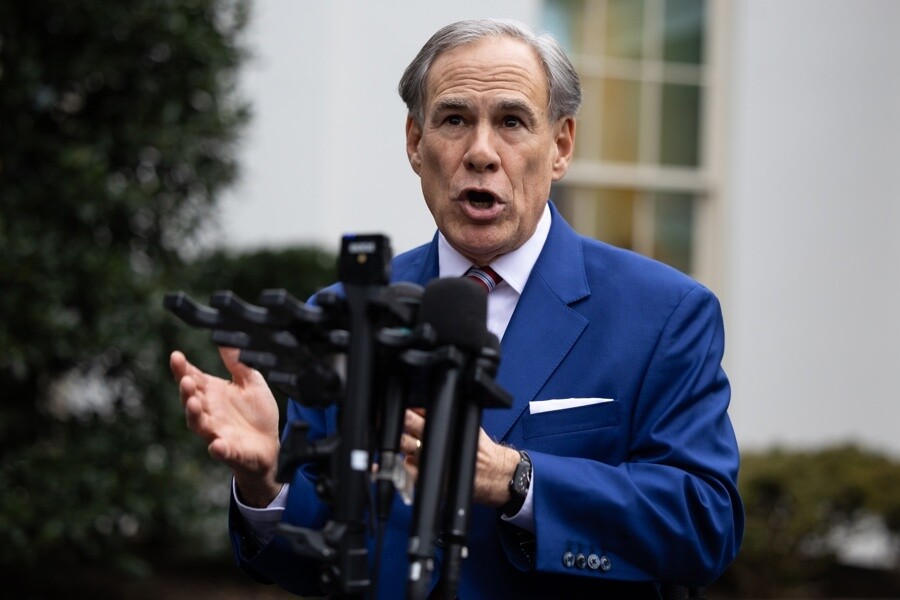
The governor of Texas, Republican Greg Abbott, ordered on Tuesday all state agencies and universities to suspend the processing of new H-1B visa applications and begin a review of the current use of this program for highly skilled foreign workers.
This directive follows an order issued last year by President Donald Trump. "The Texas economy must benefit the workers and employers of Texas," Abbott wrote in the order.
The governor, who has led anti-immigration strategies in the country, said in a statement that the measure also responds to recent reports of abuses in the federal H-1B visa program, although he did not cite specific cases.
Public universities and state agencies will not be able to initiate or submit new H-1B visa applications without the written permission of the Texas Workforce Commission until May 31, 2027, when the next legislative session ends.
Additionally, the governor requested that agencies and higher education institutions submit detailed reports to the commission on currently sponsored H-1B visas by March 27. He also ordered that efforts be demonstrated to give qualified Texas candidates a reasonable opportunity to apply for each position held by an H-1B visa holder before a new application for that position is filed.
"State government must set an example and ensure that employment opportunities, particularly those funded by taxpayer money, are filled first by Texans," Abbott said in the directive.
"The Texas economy must benefit the workers and employers of Texas," Governor Greg Abbott wrote in his order.
The H-1B visa category allows employers to request permits for highly skilled foreign professionals to work temporarily in 'specialty occupations.'
These positions require at least a bachelor's degree or its equivalent and include roles such as civil engineers, software developers, and researchers. Typically, the initial duration of an H-1B visa is three years, but it can be extended up to six years, according to the American Immigration Council.
Since the visa program's creation in 1990, Congress has limited the number of H-1B visas available each year. The current annual legal cap is 65,000 visas, with an additional 20,000 visas for foreign professionals who graduate with a master's or doctorate from a U.S. higher education institution.
Last September, President Donald Trump announced that his administration would impose a $100,000 fee on new H-1B visa applications.