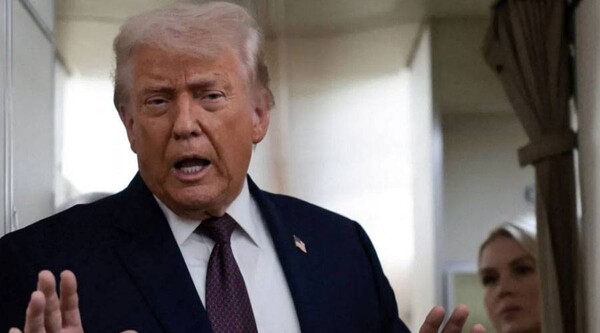
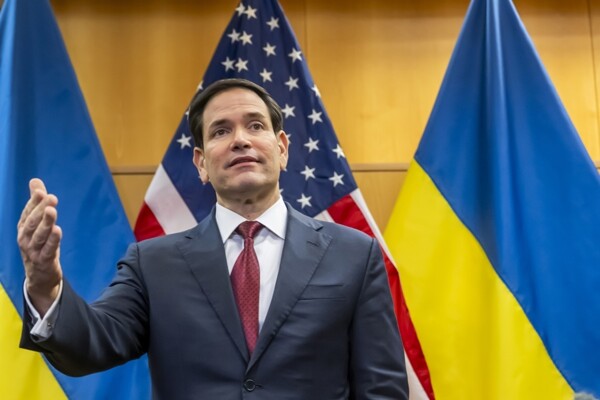
The president of the United States, Donald J. Trump, confirmed this Thursday that his administration will begin “very soon” ground attacks against drug cartels in Latin America, in an escalation of hemispheric security policies that maintain a growing focus on combating drug trafficking using military capabilities.
However, some members of Congress have questioned the legality and implications of extending military operations beyond international maritime spaces without explicit authorization from the legislative branch.
The expansion of ground operations, if realized, would mark a turning point in U.S. security policy in Latin America, reflecting a maximalist approach that combines elements of combating organized crime with the deployment of military capabilities abroad.
Additionally, the administration raised the bounty for Maduro's capture to $50 million, citing his alleged role in drug trafficking, an accusation that Caracas categorically rejects, calling it a “manufactured crisis” and a threat to national sovereignty.
From different Latin American capitals, the possible extension of ground operations has been received with concern. Trump has repeatedly accused Venezuelan President Nicolás Maduro of collaborating with criminal networks such as the so-called Cartel of the Sun, a supposed drug trafficking network within the Venezuelan armed forces, labeling them as threats to U.S. national security.
Trump's policy has included the designation of several Latin American criminal organizations as “terrorist organizations,” thus providing a legal framework used by the administration to justify the unprecedented use of lethal force against individuals associated with these networks.
The president's statement came in a Christmas message to the U.S. armed forces, in which he also assured that the trafficking of narcotics by sea has been reduced significantly and anticipated the extension of operations to land territory to face the land routes of transnational criminal organizations.
Trump emphasized during his speech that the United States has achieved a reduction of up to 96% of drug trafficking by sea, attributed to the military actions carried out for months in the Caribbean and the eastern Pacific, where the U.S. Navy has attacked vessels that, according to Washington, were transporting drugs to U.S. territory.
Diplomatic sources consulted by this dispatch indicate that several governments have stressed the importance of addressing drug trafficking through international cooperation, intelligence sharing, and comprehensive social policies, warning that a unilateral military offensive could undermine regional stability and violate international law norms.
In parallel, political sectors within the United States have expressed both support and criticism of Trump's strategy. Republican lawmakers have backed the hardline stance against transnational drug trafficking networks, highlighting the need to protect borders and reduce the arrival of drugs into the country.
The decision, which will be implemented in the coming weeks according to the White House, leaves a regional landscape marked by diplomatic tensions, debates on sovereignty, and the search for multilateral solutions to a scourge that transcends borders.
This naval campaign—with a reinforced presence of warships, aircraft, and the main aircraft carriers of the fleet such as the USS Gerald R. Ford—seeks to cut off the access routes for drugs to the U.S. market and now expand its reach to the land smuggling routes.
The announcement has alarmed governments and international analysts, as it would imply a direct intervention in the sovereign territory of countries without explicit consent from the affected nations, particularly Venezuela, which has been one of the most mentioned focuses by the White House in relation to combating drug trafficking.
“Now we are going to do it by land, and by land it is much easier,” the president stated.
The new phase of the operations is framed within the vast regional military campaign, officially called Operation Southern Spear, which since last September has involved the interdiction of multiple drug trafficking vessels, causing dozens of casualties among the crew of said ships in the Caribbean and the Pacific.