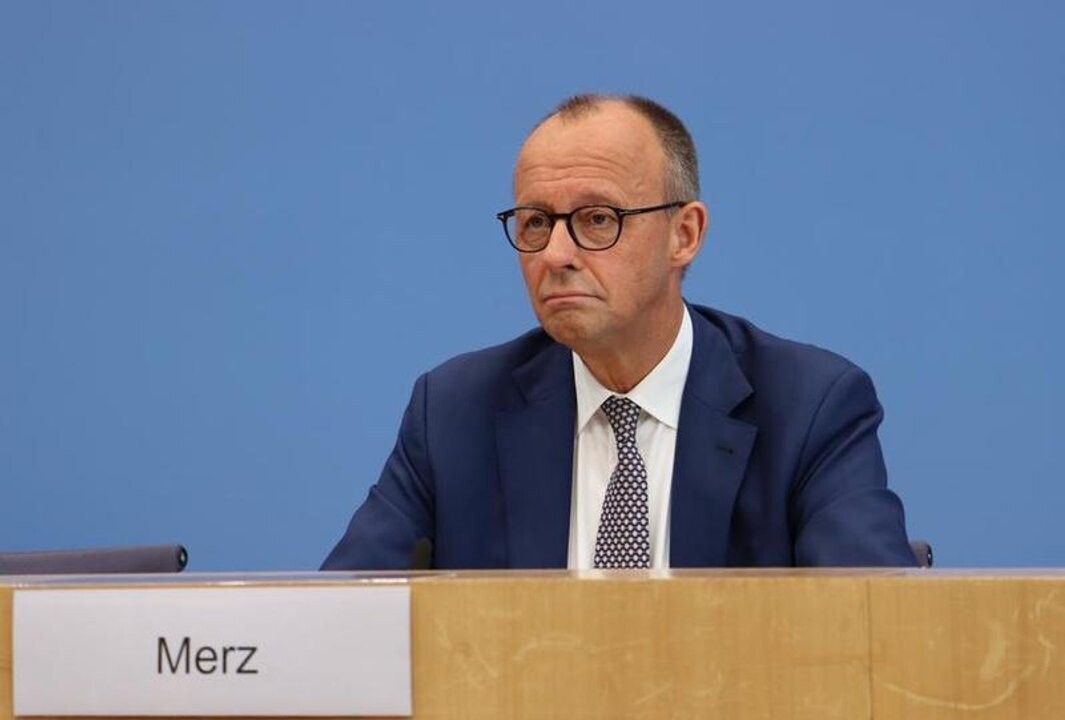
German Chancellor Friedrich Merz stated that the newly published U.S. national security strategy contains "unacceptable" points from a European perspective, emphasizing the need for Germany and the rest of the continent to strengthen their independence in security policy towards Washington.
Merz made these statements during a press conference in the German state of Rhineland-Palatinate at a time of transatlantic tension, reported the Argentine News Agency.
Criticism of the Approach and "America First"
The German Chancellor noted that while he was not "surprised" by the document's content, some aspects were "incomprehensible" to him, especially following recent accusations from U.S. Vice President JD Vance at the Munich Security Conference, where he blamed Europe for straying from shared "fundamental values".
Merz was particularly emphatic in rejecting any U.S. tutelage over the region: "I see no need for the Americans to now want to save democracy in Europe. If we need to be saved, we would manage on our own."
The German leader criticized that the principle of "America First" is particularly evident in the strategy. Although Merz acknowledged and accepted this principle as a guide for U.S. foreign policy, he warned that "America Alone" cannot serve its interests.
Several American and European media outlets pointed out that of its 30 pages, only two and a half pages are dedicated to Europe. The Financial Times reported that the document "widens the ideological gap that has opened between Washington and its traditional allies," reflecting a clear prioritization of other geopolitical challenges by the United States.