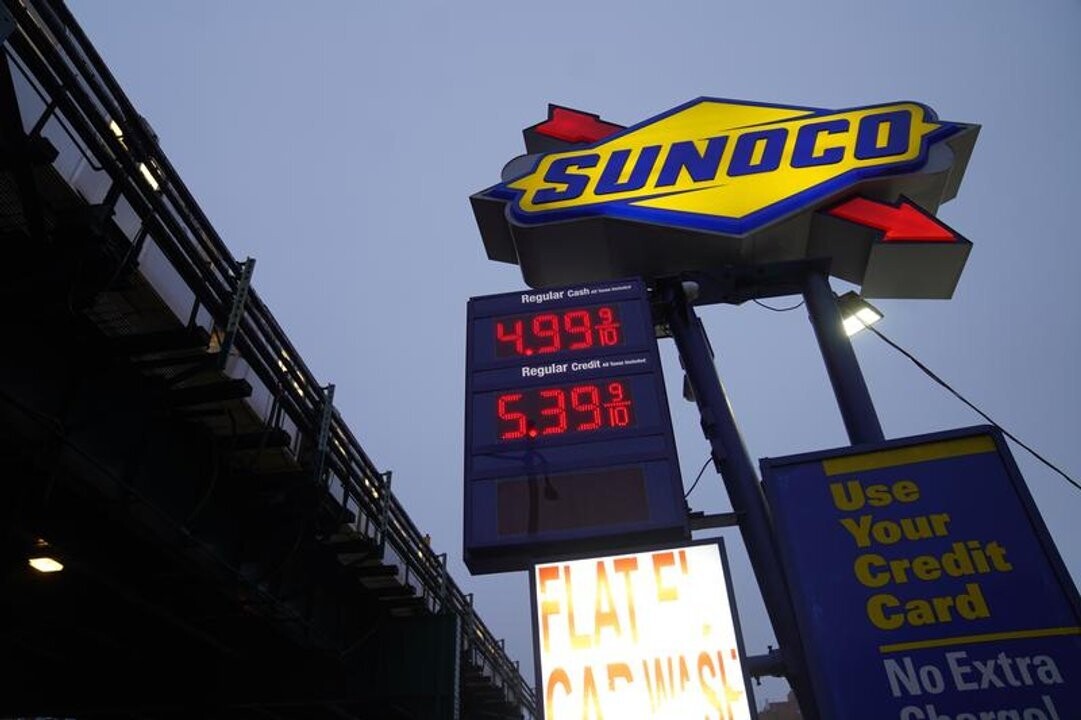
Renewed inflationary pressures threaten to exacerbate the Federal Reserve's dilemma, as progress toward the central bank's 2% goal had stalled even before the war broke out. These data are expected to keep monetary policymakers cautious about resuming interest rate cuts, after having suspended them in early January. The Federal Reserve has room to be patient, and rightly so. Despite alarming inflation figures, the financial market's immediate reaction was relatively moderate on Friday morning. Iran denounced that US and Israel attacks damaged 131 historical monuments. The US Consumer Price Index (CPI) rose 3.3% year-on-year in March due to higher energy costs, marking the biggest increase in nearly two years, the Labor Department's Bureau of Labor Statistics reported on Friday. The annual CPI growth rate in March, compared to the previous year, represented an increase of nearly a full percentage point compared to February's annual pace, according to the Bureau of Labor Statistics. Monthly, consumer prices overall rose 0.9%; the sharp increase in energy costs was the main driver of this acceleration. The energy index surged 10.9% in March, driven by a 21.2% jump in gasoline prices, which alone accounted for nearly three-quarters of the monthly increase across all items. While the truce provided some relief, energy costs remain significantly elevated compared to pre-war levels. The annual reading of 3.3% marks the highest inflation rate of US President Donald Trump's second term, reaching a level not seen since May 2024, according to this Xinhua report citing the Argentine News Agency. Michael Metcalfe, head of macro strategy at State Street, noted that the data would likely cause a big shock to prices. The ripple effects of rising energy costs are being widely felt among American consumers. Meanwhile, the core CPI, which excludes volatile food and energy components to measure underlying inflation, rose more moderately: 0.2% for the month and 2.6% year-on-year. The data reflect a period of rapid commodity price increases that preceded a fragile, temporary truce implemented this week. Additionally, disruptions in the natural gas market have sent fertilizer prices soaring, raising concerns about future food inflation. According to the American Automobile Association (AAA), gasoline prices have risen about 40% since late February to a national average of $4.15 per gallon. The rise in fuel costs has led shipping companies, airlines, and food delivery services to implement new surcharges. Today's figures buy time, but the real test is yet to come, said Alexandra Wilson-Elizondo, co-head of global investments in multi-asset solutions at Goldman Sachs Asset Management.