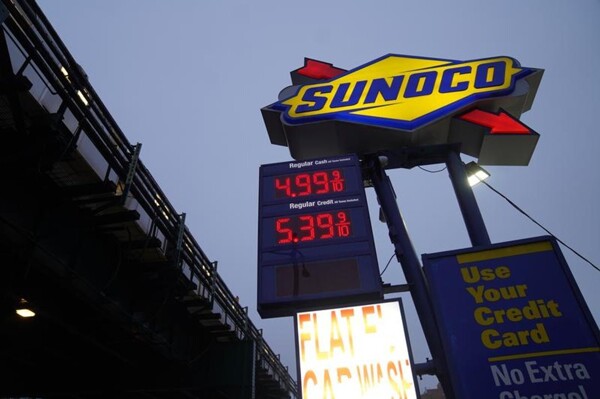
Consumer prices in the United States rose significantly last March, affected by the repercussions of the war with Iran, which led to a sharp jump in energy costs. This moved the Federal Reserve away from its own inflation target.A report from the U.S. Bureau of Labor Statistics, released on Friday, showed that the Consumer Price Index (CPI) increased by 0.9% on a monthly basis, pushing the annual inflation rate to 3.3%. This was driven by a sharp 10.9% rise in energy prices. These figures were in line with market expectations.Conversely, the core inflation rate, which excludes food and energy prices, appeared more moderate, rising by only 0.2% during the month and 2.6% on an annual basis. This was slightly below expectations, suggesting that underlying inflationary pressures remain relatively contained.The war with Iran was the main driver behind this increase, as gasoline prices surged by 21.2% in March, accounting for about three-quarters of the overall increase in the price index, according to official data.These figures highlight the challenges faced by U.S. monetary policymakers amidst energy price volatility stemming from geopolitical tensions, despite continued stability in some core inflation components.