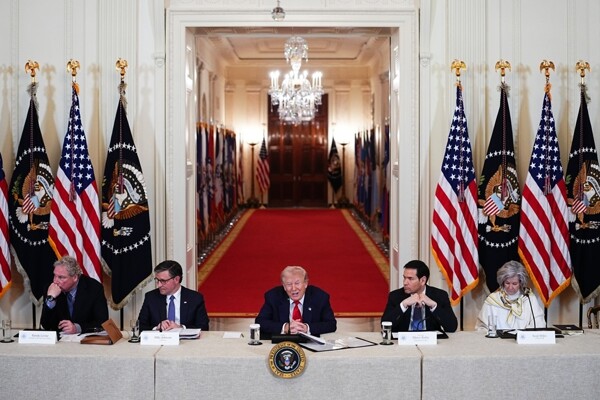
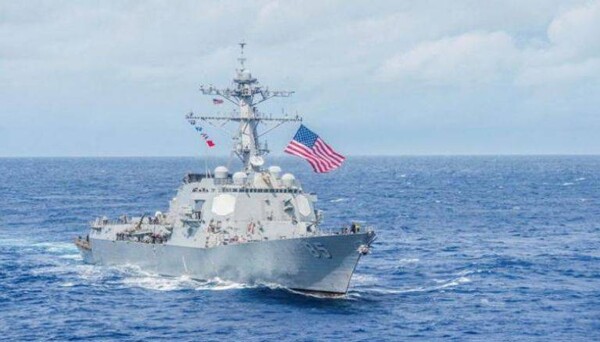
The prospect of a prolonged war—recognized even by Israeli authorities—increases the risk of new disruptions to global energy supplies. Historically, every time oil exceeded $100 per barrel, energy-importing economies faced inflationary pressures and a slowdown in growth. This Sunday, the price of oil exceeded $100 per barrel for the first time since 2022, reflecting growing concern over a prolonged interruption to global energy supplies. The jump in prices marks a key psychological threshold for the global economy and reinforces fears of an energy crisis that could quickly translate into inflation, transportation costs, and the final price of fuels in numerous countries. Brent crude, the international benchmark, was trading around $101.81 per barrel, compared to near $82 before the military offensive began. During the 2008 global financial crisis, the barrel reached $145, while in 2022 it briefly surpassed $120 after Russia's invasion of Ukraine. If the current scenario continues to deteriorate, economists and energy analysts warn that the market could enter a new phase of extreme volatility, with direct consequences for global inflation, transportation costs, and the price of energy in homes. For now, energy markets are watching closely for any signals from the Persian Gulf, where the military evolution of the conflict between the United States, Israel, and Iran could define the course of oil and, to a large extent, the global economy in the coming weeks. Iran maintains the capacity to influence this vital maritime passage, which has sparked uncertainty in the markets. Analysts at investment bank Goldman Sachs warned that the price of the barrel could escalate to $150 by the end of the month if the disruption in the flow of oil through that trade route continues. According to the bank's estimates, the flow of crude through the strait has fallen much more than initially expected. In the United States, the average price of gasoline rose to around $3.45 per gallon, reflecting an increase of more than 30% since military operations against Iran began. Amid this situation, President Donald Trump sought to downplay the economic impact of the war. In parallel, the West Texas Intermediate (WTI), a key indicator of the US market, reached $101.56, compared to the $77 it had recorded before the outbreak of the conflict. The rise in oil prices is directly linked to the military escalation in the Persian Gulf and, especially, to tensions in the strategic Strait of Hormuz, a maritime route through which approximately one-fifth of the world's crude oil trade passes. In statements to ABC News, he described the increase in fuels as "a small glitch", while assuring that his administration was fully aware of the possible energy consequences of the conflict. The leader also sought to divert attention to the military results of the offensive, claiming that US forces had destroyed the entirety of the Iranian Navy during naval operations in the Persian Gulf. "The good thing is that we sank 44 of their ships, which is their entire fleet," the president stated. However, those figures have not been confirmed by Tehran, although various military sources agree that Iran would have suffered significant losses to its naval capabilities. Beyond the exact figures, the conflict is already causing concern in international economic and political circles. New York - March 9, 2026 - Total News Agency - TNA - The economic impact of the war between the United States, Israel, and Iran is beginning to be strongly felt in international markets. Specialists had calculated that the flow could be reduced to around 15% of its usual level, but the latest measurements suggest that only 10% of usual shipments are managing to pass through the maritime passage. This is largely due to security restrictions, the paralysis of operations of some tankers, and the naval maneuvers deployed in the area following attacks launched by the United States and Israel against strategic targets of the Iranian regime. A renowned energy market analyst pointed out that the current impact on commercial flows could be 17 times greater than the shock recorded in April 2022, when Russia's invasion of Ukraine altered global energy markets and pushed oil prices to $110 per barrel. According to that analysis, if the interruption in the Strait of Hormuz continues for several weeks, crude oil prices and especially refined fuel prices could exceed the peaks recorded in the 2008 and 2022 energy crises. The increase is already being passed on to consumers.