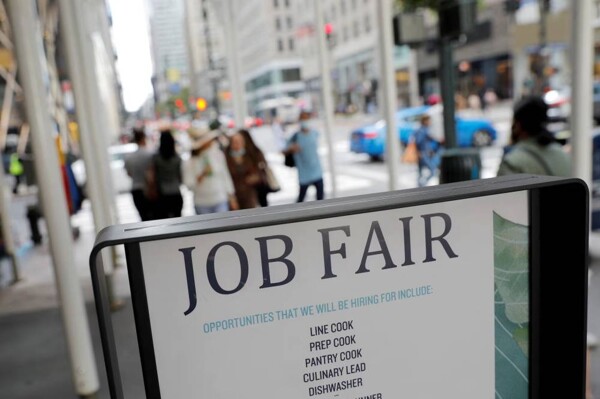
Seven out of ten companies in the United States now use artificial intelligence (AI) in their hiring processes, a trend that is spreading to Mexico and Brazil, and 77% of employees fear that the technology could lead to job loss, reveals a new report from Hays. One in five American companies, around 20%, reports that AI is both replacing and complementing roles, according to the '2026 Hays Salary & Hiring Trends Guide' from the human resources firm with a presence in over 30 countries. Nearly two-thirds of companies, 64%, believe that AI will increase productivity, and nearly half, 48%, say they use this technology as 'support for teams' without cutting jobs. For now, 3.9% of firms indicate that after an employee resigns, they do not rehire but replace their duties with AI. Frozen or at-risk jobs Although the adoption of artificial intelligence has not led to mass layoffs, Hays warns of a slowdown in hiring, as 42% of employers prefer to prioritize the skills of their current employees over hiring new ones. This is concerning for job seekers, as Hays states that candidates now only have a 0.4% chance of getting a job after applying online, according to a Business Insider report. It also notes that 30% of current jobs in the United States could be automated by 2030, and AI tools will 'significantly impact' 60% of them, based on data from McKinsey & Company. Meanwhile, it cites that 50% of entry-level white-collar jobs could disappear by 2030, as stated by the CEO of AI company Anthropic, Dario Amodei. Effects on Latin America and young people The use of AI in hiring and company operations is spreading to Latin America, particularly in Brazil and Mexico, indicates Jon Sampson, President for Latin America and Director of Delivery for Hays in the Americas, in an interview with EFE. 37% of companies in Latin America are 'actively implementing' generative AI tools, including Mexico, which already ranks second in adoption in the region, while the leader, Brazil, is expected to see a 67% growth in this sector by 2030. 'Latin America may not be unique in the way it is evolving (in AI), but the speed of change is more accelerated than what we are seeing in many other parts of the world,' Sampson points out. The expert concedes that 'there is some truth' in the complaints of young people, especially recent graduates, because 'when it comes to those first jobs and junior positions, they are more at risk, although opportunities still exist.' 'We are going through a structural change. It is not a short-term change, but it is more gradual and the adoption is gradual, but it will be irreversible,' he expresses. Signs of caution On the other hand, Gus Rossi, director of the technology team at Omidyar Network, states that 'employers are being more cautious' for now and that the 'inferential evidence' is that AI will first affect white-collar jobs, that is, office jobs, and those in the 'knowledge industry.' Even so, he warns in an interview with EFE that it is still difficult to attribute the slowdown in hiring or layoffs in the United States to AI, which reported an unemployment rate of 4.3% in January this Wednesday. Although layoff announcements from companies like Amazon have caused concern, the digital and technology policy specialist also considers that some companies are 'using AI as a pretext' because they believe it is a positive message for their investors. 'We are not seeing the same level of job displacement by AI in Europe or other Asian countries as we are seeing here (in the US).