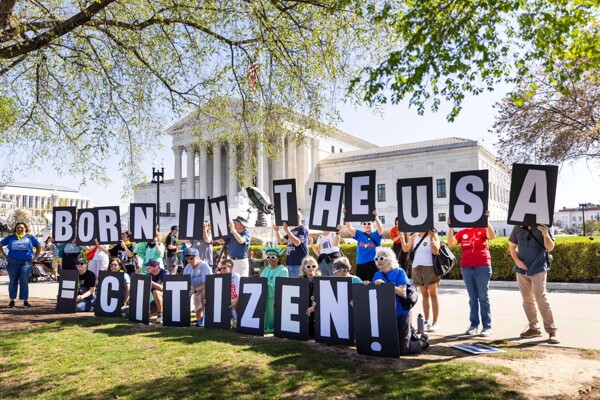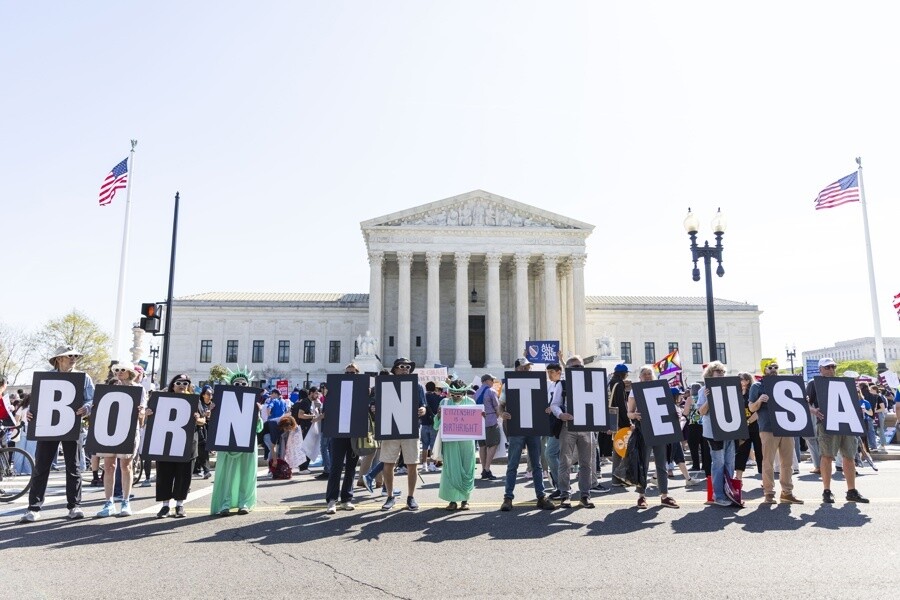
Supreme Court justices expressed skepticism on Wednesday toward the arguments from the administration of U.S. President Donald Trump to limit birthright citizenship for children of undocumented parents or those on temporary visas, during a hearing the president himself attended. The justices persistently questioned both government lawyers and attorneys from the American Civil Liberties Union (ACLU), the organization supporting the lawsuit, which describes Trump's executive order to implement his controversial policy as 'unconstitutional.' Attorney General John Sauer defended the Trump administration's position, insisting that times have changed since the 19th-century adoption of the 14th Amendment, which enshrines the right to citizenship for those born in the country, and that the presidential measure aims to combat so-called 'birth tourism' and illegal immigration. Trump has also criticized the practice of giving birth in U.S. territory to gain dual citizenship. On Monday, Trump had already attacked the 'stupid' U.S. judicial system for standing by idly while 'the world is getting rich selling' U.S. citizenship. More than 30 nations, including the U.S., guarantee this right with exceptions for the children of diplomats, mostly in Latin America. In Europe, citizenship is often contingent on requirements such as at least one parent being a citizen or legal resident, and in Spain, the right is only recognized if at least one parent was born in the country or when parents cannot pass on their nationality to the child. Legal experts and activists warn that a victory for the Republican would set a dangerous precedent for protecting constitutional rights. For the first time in U.S. history, a sitting president attended a hearing at the Supreme Court. Trump arrived ten minutes before the hearing began and left about an hour later, listening silently from the first row of the public section, close to Sauer's lectern. Also in the chamber were Attorney General Pam Bondi, Commerce Secretary Howard Lutnick, and renowned actor Robert De Niro, one of the most vocal critics of Trump. Outside, dozens of protesters gathered in front of the Supreme Court building to protest the president and his policies. 'We are the only country in the world stupid enough to allow citizenship by “birthright!”' Trump wrote on his Truth Social media after leaving the court. Limiting automatic citizenship for children of illegal immigrants was one of the Republican leader's campaign promises, who returned to power over a year ago with a harsh anti-immigration policy. 'But the Constitution is the same,' Chief Justice John Roberts, a centrist conservative, retorted to Sauer. Other conservative justices like Samuel Alito, Neil Gorsuch, and Amy Coney Barrett also pressed the administration on the historical interpretation and precedents cited by Sauer, which the justices believed could work against the administration's arguments. Barrett, considered a swing vote, noted that the exceptions proposed by Trump to birthright citizenship are not explicitly stated in the legislation, a view echoed by another key conservative, Brett Kavanaugh, who warned that Congress would have changed the wording in subsequent laws if it had identified any anomalies. The judges also asked pointed questions to ACLU lawyer Cecillia Wang, representing the group of immigrants who filed the lawsuit, though these questions seemed more aimed at clarifying legal issues than attacking the plaintiffs' position. Last June, the court's conservative majority (6-3) sided with Trump in his request to lift state-level blocks on his order but did not rule on its constitutionality.