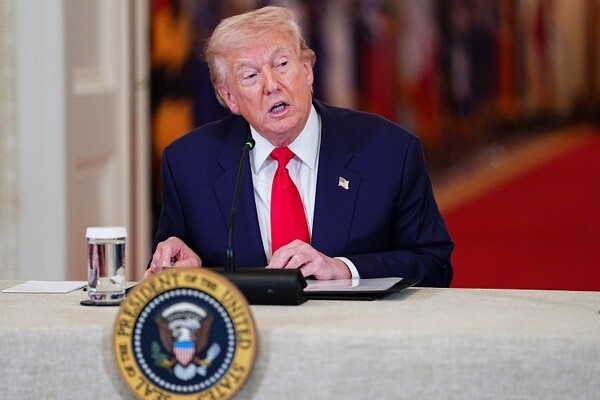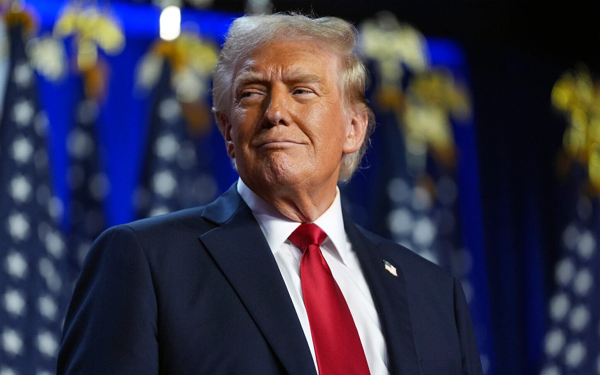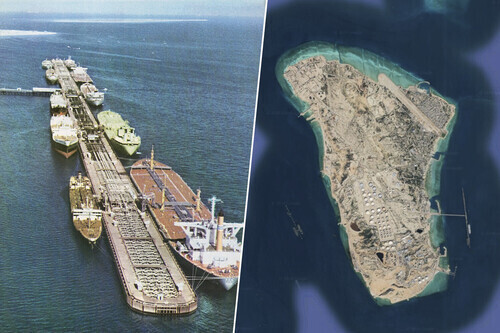
The United States raised the war with Iran to a new level on Saturday, March 14, 2026, by carrying out a large-scale attack on the island of Jark (also cited internationally as Kharg), the main crude oil export node of the Islamic Republic. This move shows that Washington has demonstrated it can strike the heart of the enclave's military, already altering the regime's strategic calculation. From the Iranian side, the verbal response was immediate and threatening. President Donald Trump assured that U.S. forces 'annihilated' all military targets on the island and launched a strategically significant warning: if Tehran maintains its pressure on the Strait of Hormuz, the next phase could directly target Iran's oil infrastructure. The strike was neither minor nor symbolic. Although there was no immediate formal attribution, the episode fits the pattern of harassment that for years militias aligned with Iran deployed in Iraq, and it confirms that the war is already spilling over to American interests far beyond Iranian territory. The overall picture is, therefore, increasingly delicate. Washington showed the capacity to devastate military targets in Iran's export jewel without yet touching the tanks and terminals that sustain its economy. Tehran, for its part, responded with threats against regional energy infrastructure and maintains pressure on a maritime corridor essential to the world. Between these two signals, a zone of maximum danger opens up: that of a war that no longer discusses only military positions, but the concrete possibility of striking where it hurts the most, oil, ports, and the flow that supports a large part of the global economy. The island is not just any point: it channels about 90% of Iran's oil exports and concentrates terminals, pipelines, storage facilities, and decisive logistical facilities for the country's energy flow. Military commanders and state media indicated that any attack on the energy infrastructure of the Islamic Republic would be met with counterattacks against oil and energy assets linked to U.S. interests or to companies that cooperate with the United States in the region. Before the start of the war, Tehran had accelerated its production and sales to strengthen its finances. That data explains why the energy market, major importing powers, and the Gulf monarchies followed the day with maximum tension: serious damage to Jark or a harder closure of Hormuz would have a direct impact on prices, supply, and regional stability. The background already showed that Jark was a critical vulnerability for Iran, but now the risk is much more concrete. Reuters reported that the island shipped this year around 1.55 million barrels daily out of a total of 1.7 million exported by the country, and that it has a storage capacity close to 30 million barrels. The reading is clear: Tehran is trying to deter a new wave of attacks by warning that it can expand the conflict to refineries, ports, terminals, and Gulf cities. The escalation already had an immediate response on another sensitive front. The leader stated that he decided not to destroy the oil network 'out of decency,' but made it clear that such restraint could end immediately if Iran or its allies interfere again with navigation through Hormuz, a corridor through which about a fifth of the world's traded oil circulates. According to coincident reports and the confirmation of the US Central Command (CENTCOM), the offensive reached more than 90 military targets in Jark, while preserving the oil facilities for now. In practical terms, attacking that enclave is equivalent to putting a direct target on the most delicate economic nerve of the Iranian regime. Trump's threat further aggravates that message. In Baghdad, a missile struck a helipad within the U.S. embassy complex, one of the largest diplomatic facilities of the United States in the world.