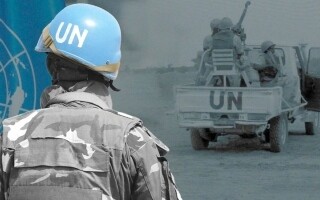
In its absence, the element of deterrence represented by the organization in conflict zones erodes. A shift towards smaller, politically-focused missions may be a logical strategic choice, but the success of this transition requires sufficient and well-considered funding. UN missions in the Democratic Republic of Congo, South Sudan, and the Central African Republic were among the hardest hit by these financial and personnel cuts. In many regions, particularly in eastern Congo and rural areas of South Sudan, peacekeeping forces serve as the only organized barrier between armed groups and vulnerable civilians. However, this perspective overlooks a deeper and more dangerous reality: financial insufficiency is not merely an administrative glitch but a direct factor in undermining and weakening the system of collective global security. The UN's regular budget, especially that related to peacekeeping, security, sustainable development, and human rights promotion, decreased from $3.72 billion in 2025 to $3.45 billion by 2026. Many have grown accustomed to viewing the UN's liquidity issues as a technical matter, linked to budgetary complexities and funding procedures. If the largest contributor reduces its share without proportional compensation from other parties, the structure of international stability will gradually shrink. The choice before member states seems not to be one between spending and saving, but between investing in preventive stability and bearing the costs of unmanaged conflicts. Continued financial ambiguity may prompt some of these states to reassess their level of engagement and sustainability. In conclusion, the liquidity crisis raises a pivotal question: is it a transient crisis tied to a temporary political circumstance, or an indicator of a deeper structural shift in the concept of collective global security? If financial commitments become subject to fleeting political considerations, the neutrality and legitimacy of peacekeeping operations will erode. Therefore, funding for peacekeeping is not an act of charity, but a strategic investment in preventing escalation and stopping the regional spread of crises. Geopolitical Impacts The impact of the liquidity crisis is not confined to a narrow scope but extends to broader geopolitical repercussions. These cuts come at a historical moment when armed conflicts are at their highest levels since World War II, which multiplies the danger of reducing resources available for international stabilization efforts. In this context, Pakistan's Permanent Representative to the UN, Ambassador Qasim Iftikar Ahmad, warned that the current liquidity crisis directly affects the effectiveness of peacekeeping operations, limiting the ability of UN forces to protect civilians, deter violence, and prevent its escalation. These warnings take on special importance given that Pakistan is one of the largest contributing troops to peacekeeping missions and one of the oldest countries to have deployed soldiers under the UN flag. The Largest Contributor Financially, the United States remains the largest contributor in UN history, yet its arrears have exceeded $2.2 billion. Without this, reform becomes arbitrary reduction that weakens effectiveness rather than enhancing it. Cutting contributions to the UN budget comes at a historical moment when armed conflicts are at their highest levels since World War II. The arrears of the United States, which is the largest contributor in the history of the organization, have exceeded $2.2 billion, and Washington has also indicated its intention to cancel its contributions to peacekeeping operations. When this barrier weakens due to a lack of funding, the capacity for deterrence diminishes, and the risks threatening civilians, including restrictions on their movement and exposure to violence, increase. Peacekeeping forces are tasked with multiple duties, including monitoring ceasefires, curbing the resurgence of violence, and contributing to conflict resolution. When this foundation weakens, so too does the UN's deterrent capacity, and the multilateral system risks gradual erosion, which could open the door to the spread of more complex and destabilizing conflicts. From 'Aja Times' The Credibility of the UN Loss of regular funding means not only a reduction in field capabilities but also threatens the very credibility of the United Nations. Although the peacekeeping budget, ranging from five to six billion dollars annually, seems large on the surface, it remains paltry compared to global military spending, which exceeds two trillion dollars annually, reinforcing the reality that prevention is far less costly than intervention after crises escalate. Peacekeeping operations are characterized by their multilateral nature, dependence on the consent of the host state, and basis in international legitimacy. They provide a conducive environment for political dialogue, support the implementation of ceasefire agreements, and contribute to rebuilding conflict-damaged national institutions. This reduction has led to the elimination of some 2,900 jobs at various locations worldwide, reflecting the scale of pressure the UN faces as international crises escalate. As for peacekeeping operations, the appropriations for the period (2025-2026) amounted to about $5.38 billion, but they included a deficit of nearly two billion dollars due to some countries' failure to pay their assessed contributions. Collective security has historically been based on the regular and predictable sharing of burdens. The current financial deficit is leading to the redeployment of some peacekeepers to their home countries, in addition to the freezing of civilian staff positions. For fragile states, these operations are sometimes the only tool capable of providing a minimum level of stability. This was also reflected in the decreased pace of patrols, restrictions on the movement of UN forces, and their reduced presence in conflict zones. Growing Risks A 15% cut in mandatory spending translates to an actual reduction of about 25% in the number of military and civilian personnel on UN duty in Africa, equivalent to the withdrawal of between 13,000 and 14,000 soldiers and police officers. The absence of a regular cash flow makes the execution of field tasks conditional and uncertain. Jean-Pierre Lacroix, the Under-Secretary-General for Peacekeeping Operations, acknowledged that administrative reforms would not be sufficient to offset the severe liquidity shortfall. Troop-contributing countries rely on the regularity of payments to maintain equipment readiness and ensure domestic political support. The success of these operations is often measured by the number of crises contained before they erupt. Instability in Africa and the Middle East can impact maritime routes in the Indian and Red Seas, as well as energy corridors in the Gulf, which are vital arteries for trade and Asian growth. When the largest funders adopt a selective approach to meeting their obligations, the element of stability and predictability erodes, and UN operations become hostages to political fluctuations. Neglecting fragile states could turn them into hubs for arms smuggling, extremist networks, and organized crime, threatening trade routes and global supply chains. China is the second-largest contributor to the UN budget, and its role in deploying troops is growing. Stable funding boosts morale, ensures readiness, and supports rapid response. Financial support is often linked to strategic influence within international institutions. As for Pakistan, it has deployed over 250,000 of its soldiers in 48 UN missions across four continents, with 182 of them falling while performing their duties under the UN flag, reflecting the depth of its commitment to peacekeeping. The Pakistani ambassador indicated that delays in payments and the reduction of mandates could affect readiness, rapid deployment, and specialized units. During the Trump administration, hundreds of millions of dollars previously allocated for peacekeeping operations were canceled, and in 2026, Washington signaled its intent to completely eliminate its contribution to these operations, justifying it with dissatisfaction over the results of the missions in Mali, Lebanon, and the Democratic Republic of Congo. The American contribution is the cornerstone of funding for UN peacekeeping operations.