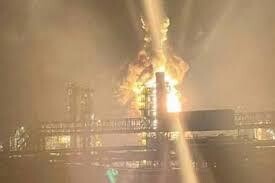
From this perspective, strikes against Russian energy serve as a defensive response to sustained Russian aggression and its repeated attacks on civilian populations and Ukraine's energy system. However, from the American side, the message suggests a practical red line: pressure on Moscow should not, by extension, fall on assets with American investment or on routes that play a key role for third countries like Kazakhstan, whose energy stability is also part of the regional chessboard. In other words, operational damage not only cuts flows and compromises the income of private actors but also introduces geopolitical friction between allies who share—with nuances—the goal of containing Russia. According to the consortium itself, a Ukrainian attack at the end of November 2025 damaged terminal infrastructure, affected a mooring point, and forced operations to be suspended and cargo restricted for a period. In the background, there is also the discussion on how to sustain a coherent sanctions and economic pressure strategy without causing self-inflicted damage or opening diplomatic rifts on the front line. The case of the CPC is a clear example of this complexity. The phrase seeks to avoid a harsher interpretation: that Washington wants to limit Ukraine's operational freedom on a front that Kyiv considers legitimate for reducing the aggressor's financing capacity. The episode exposes a growing tension as the war drags on: the difference between Ukraine's political-military objective and the collateral costs that may appear for allies and partners. “We heard from the State Department that we should refrain from attacking American interests,” affirmed the ambassador, specifying that the United States focused on the economic impact on companies associated with that infrastructure. The point is sensitive because the CPC is not a “domestic” Russian asset. Stefanishina assured that the United States did not request a broad ban on attacks on Russian military or energy targets, but rather urged caution when the target affects American interests. This precedent is what Washington brings back to the table at a moment when Ukraine seeks to maintain its pressure on Russia's war economy while avoiding friction with its main external backer. In Kyiv, the reading of the warning is intended to be contained. For the United States, the same strike can generate unwanted economic and diplomatic costs if it drags in its own companies or complicates partners not directly involved in the conflict. The warning, then, does not change the general sense of Western support for Ukraine, but it does add a layer of “precision” on which targets are considered sensitive. The revelation came from Ukraine's ambassador to Washington, Olha Stefanishyna, who described the State Department's message as a formal diplomatic note. At a press conference, Stefanishyna explained that the American communication was not a general objection to Ukraine's campaign against Russian energy infrastructure, but a specific protest over episodes in which, according to Washington, American investments linked to the oil export chain in the Black Sea were compromised. For Ukraine, hitting infrastructure that helps sustain Russia's oil revenues can be seen as a way to shorten the war. “It was specifically related to the fact that American economic interests were violated there,” she said. Kyiv has been arguing for months that attacking logistics, refineries, storage facilities, and terminals linked to Russian oil directly impacts the Kremlin's treasury, one of the pillars feeding the invasion and the military machine. A substantial part of Kazakh exports depends on that route, and the consortium includes stakes from Russian, Kazakh, and Western companies, including American Chevron. And it sends a signal: in a war where energy is a battlefield, coordination among allies is not just about weapons and munitions, but also about pipelines, terminals, and corporate balance sheets. Washington, February 26, 2026 - Total News Agency - TNA - The United States transmitted a specific warning to Ukraine: to refrain from executing attacks that end up affecting American economic interests in Russian territory. The signal came after a Ukrainian strike on facilities linked to the Caspian Pipeline Consortium (CPC) near Novorossiysk on the coast of the Black Sea, a strategic zone due to its proximity to Crimea and its role as an export outlet for crude to global markets. It is a system vital for transporting crude from the Caspian region to international markets: the pipeline exceeds 1,500 kilometers and connects oilfields in western Kazakhstan with the marine terminal in Novorossiysk, from where oil is loaded onto tankers. The terminal in Novorossiysk operates on Russian-controlled territory in a high-value military area, and at the same time is part of a transnational energy circuit with Western participation. “We took that into account,” she said. The CPC then stated that there were no spills in the Black Sea or casualties.