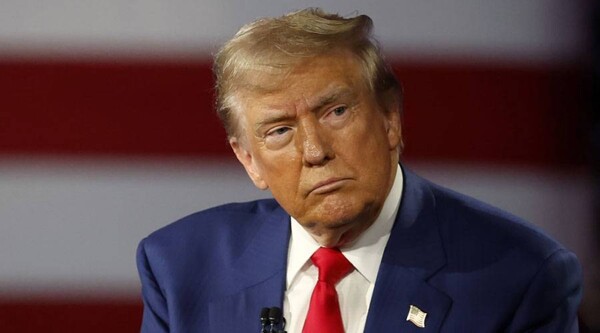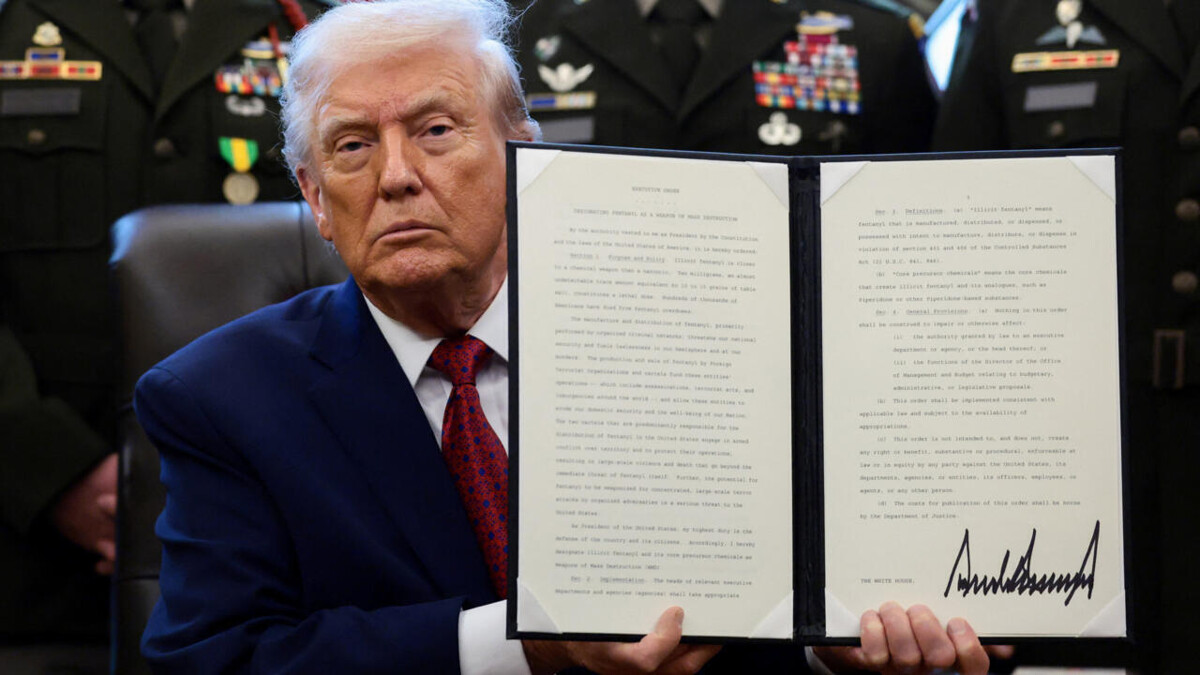
President Donald Trump has intensified his offensive against drug trafficking and transnational organized crime with two high-impact decisions that redefine Washington's approach to internal and external security. The United States no longer views drug trafficking as a police issue but treats it as a hybrid war with geopolitical implications. The Trump administration has classified fentanyl as a weapon of mass destruction, equating it to chemical, biological, or radiological devices due to its capacity to cause mass casualties. The President stated that fentanyl is responsible for between 200,000 and 300,000 deaths annually. "No bomb does what this does," he affirmed. Simultaneously, Secretary of State Marco Rubio announced that the Gulf Clan (Clan del Golfo), Colombia's largest criminal organization, is designated as a Foreign Terrorist Organization and a Specially Designated Global Terrorist. The group is accused of armed attacks against security forces, officials, and civilians. This new classification enables extraordinary state tools in both criminal and national security spheres and reinforces Trump's narrative that drug trafficking constitutes a direct threat to American sovereignty and life. This marks an unprecedented hardening of U.S. drug policy, aiming to send a clear message both domestically and internationally: the trafficking of synthetic opioids will be treated as deliberate aggression, with consequences comparable to those of a non-conventional attack. The decision complicates the peace talks the group was holding with the government of Gustavo Petro and exposes a deep divergence between regional negotiation logic and the zero-tolerance line adopted by the White House. These actions solidify a doctrine of direct confrontation against organized crime, which already included the designation of major Mexican cartels, transnational gangs like Tren de Aragua and MS-13, and criminal organizations from Ecuador and Venezuela as terrorists. It also enhances U.S. capacity to act against networks linked to the group outside Colombian territory. The measure comes amid growing tension between Washington and Bogotá, marked by the deployment of U.S. military forces in the Caribbean and the Eastern Pacific as part of Trump's anti-drug offensive, and by Colombian government criticisms of the American security strategy. This decision represents a qualitative leap in U.S. strategy by formally equating a narco-criminal structure with international terrorist groups.