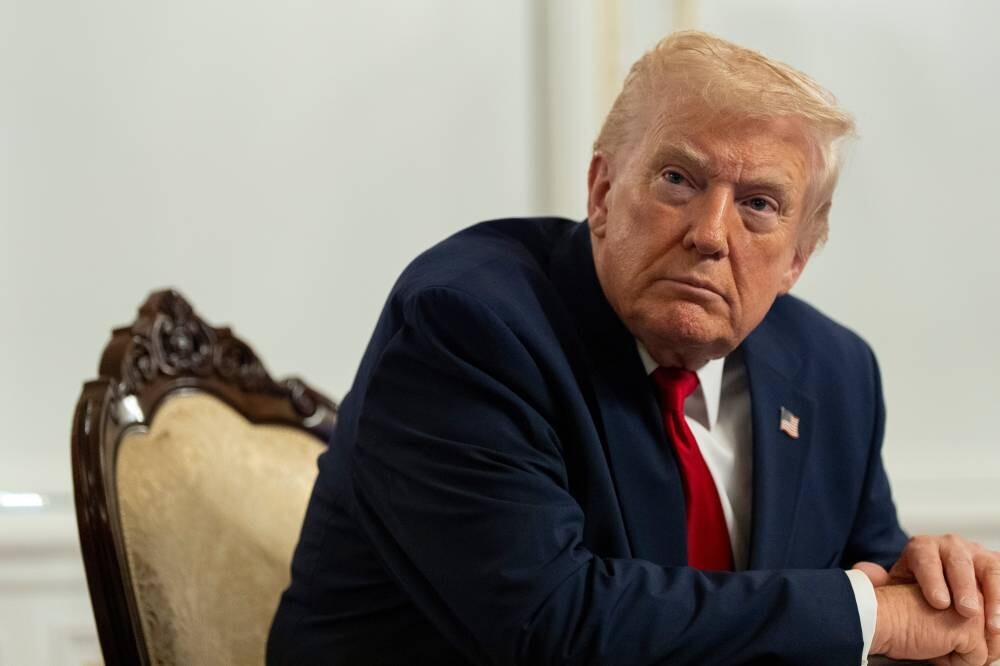
The president of the United States, Donald Trump, announced this Saturday on his social network that the airspace over and around Venezuela should be considered “closed in its entirety”. In his message, Trump urged “all airlines, pilots, drug traffickers, and human traffickers” to avoid flying over Venezuela, without specifying exactly how the measure will be implemented, the control mechanisms, or the criteria that would determine violations of this prohibition. The announcement comes in the context of increasing pressure from Washington on the government of Nicolás Maduro, officially motivated by the fight against drug trafficking and the supposed “narco-terrorism” linked to groups such as the Cartel of the Suns. The announcement came after The New York Times reported on a telephone conversation between Trump and Venezuelan President Nicolás Maduro to explore a possible meeting, a call that neither side has officially confirmed or denied. U.S. Secretary of State Marco Rubio, a critic of the Maduro government, participated in the call, in which the two leaders ultimately did not agree on concrete plans for their meeting. The news of the conversation came a day after Trump warned that his Armed Forces would act “very soon” on land against supposed “Venezuelan drug traffickers,” while maintaining the naval deployment in the Caribbean. In response, Caracas responded by revoking the operating permits of six major international airlines — including Iberia, TAP Air Portugal, Avianca, LATAM Airlines, Gol Transportes Aéreos, and Turkish Airlines — which it accused of participating in what it called “state-sponsored terrorism” backed by the United States. This move by Washington, which some analysts interpret as part of a maximum pressure strategy to force a regime change in Caracas, raises questions about its geopolitical and humanitarian effects. The threat of a near-total closure of air traffic complicates regional connectivity and plunges Venezuela into an aerial isolation that can have economic, diplomatic, and migratory consequences. For the international community and the countries of Latin America, this measure constitutes an alarming signal, placing the region at a crossroads of military escalation, regional security, and respect for national sovereignty.