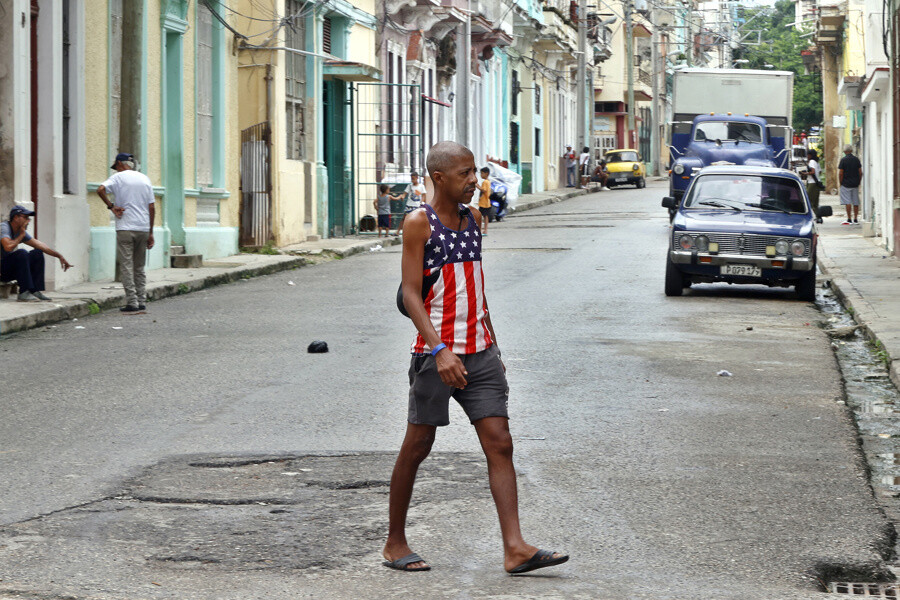
US sanctions against Cuba, called an 'embargo' in the United States and a 'blockade' on the island, are a complex web of economic, commercial, and financial measures imposed over seven decades.
On Wednesday, the Cuban government again won the vote in the United Nations General Assembly by a large majority on the resolution to end these measures, as it has done since 1992.
US sanctions against Cuba began, in the geopolitical context of the Cold War, after the revolution's victory on January 1, 1959, but in recent years, the main arguments in Washington have pointed to democracy and respect for human rights.
Here are its main milestones:
1960. Suspension of Cuba's sugar quota in the US market and a partial embargo on exports, except for food and medicine, via controls from the Department of Commerce.
1962. Prohibition of all trade with Cuba by Presidential Proclamation 3447, signed by Democrat John F. Kennedy.
1963. Freezing of Cuban assets under the jurisdiction of the United States.
1982. The US government, under Republican President Ronald Reagan, includes Cuba on the list of State Sponsors of Terrorism, a political designation with serious effects on international transactions.
1992. The Cuban Democracy Act, or Torricelli Law, comes into force, prohibiting trade with Cuba by foreign subsidiaries of US companies, and introduces the 180-day rule (ships docking at Cuban ports cannot enter the US for 180 days). It also prohibits direct financial transactions.
1996. The Helms-Burton Act is approved, which codifies the sanctions into US law, making it difficult for a president to alter them by decree. Notable in this law are Title III, which allows lawsuits in the US for 'trafficking' in confiscated properties in Cuba (though its application is suspended), and Title IV, which imposes visa restrictions on executives and investors related to confiscated properties.
2000. During the presidency of Republican George W. Bush, exports of food and medical products to Cuba are authorized, but only with cash payment in advance.
2004. Travel to Cuba is further restricted, with only one trip every three years for close relatives, and remittances are capped.
2015. Remittances to Cuba are capped at $1,000 per sender per quarter, transfers to Cuba through US intermediaries are prohibited, and all commercial flights by US airlines to Cuba are suspended (except to Havana).
2017. The Trump administration creates the Cuba Restricted List with a series of entities linked to the Cuban Revolutionary Armed Forces (FAR) and their business conglomerate (GAESA).
2019. A succession of measures against Cuba during Republican Donald Trump's first presidency.
2020. The financial firm Fincimex, belonging to GAESA, the main remittance processor on the island, is included in the Restricted List, and other entities are prohibited from processing currency transfers to Cuba.
2021. The Trump administration returns Cuba to the list of State Sponsors of Terrorism, with all legal and financial consequences. In addition, transactions are prohibited, and travel and related payments are heavily restricted (this general framework is still in effect, although with multiple amendments).
2021. Title III of the Helms-Burton Act is activated for the first time, travel is restricted, US cruises to Cuba are prohibited, and all commercial flights by US airlines to Cuba are suspended (except to Havana).
Over the following months, more entities are added to the Restricted List, and visas are restricted for Cuban President Miguel Díaz-Canel and several ministers, as well as for officials (from third countries) involved in Havana's medical missions.
2025. The second Trump administration reverses the decision made five days earlier by Biden and returns Cuba to the list of State Sponsors of Terrorism.
Washington, with Democrat Joe Biden as president, applies Global Magnitsky sanctions against Cuban state elements accused of being behind the repression following the social outbreak of July 11, 2021, in Cuba.